
 Software Development
 Security Services
 Cloud Services
 AI Services
 Other Services















 TechMagic Academy




A comfortable bed and a decent breakfast used to be the product. Now they are the entry fee. Guests arrive expecting the booking to work on their phone, the room to remember them, and someone at the desk to know their name, and they write about it publicly when any of that fails.
The economics behind that are worth sitting with. Frederick Reichheld of Bain & Company, who created the net promoter score (NPS), found that acquiring new customers can cost 5 to 25 times more than keeping existing ones. Raising customer retention by just 5% can lift profits by 25% to 95%. Every point of guest satisfaction is compounding into the next booking.
This guide covers what shapes a hotel stay, where the physical, digital, and emotional layers meet, and six steps to improve hotel guest experience with examples from hotels doing it now.
Key Takeaways
- Reviews now outrank brand recognition and price. An Expedia study found travelers pick the better-reviewed hotel in 72% of cases, and pay 35% more for 4.4/5 over 3.9/5.
- Keeping a guest is cheaper than finding one. Bain puts acquisition at 5 to 25 times the cost of retention.
- For 84% of guests, experience carries the same weight as the product itself, according to Salesforce.
- Self-service is now the default expectation. 74% of guests want to do online what they could do at the desk.
- Technology removes friction and staff create the memory. Cutting the wait at check-in earns you nothing if nobody looks up when the guest arrives.
- The sequence that works: audit what you have, then fix booking, check-in, the stay, dining, and departure in that order.
What Is Hotel Guest Experience
Hotel guest experience is the overall impression a guest takes away from their stay, across physical, digital, and emotional touchpoints. It covers the booking process, the room, every interaction with staff, and the follow-up after they leave.
Why Is Guest Experience Important
Three things follow from getting it right.
Guests come back. High guest satisfaction drives repeat business, and a returning guest costs a fraction of a new one to reach.
They also spend more once they are in the building, on dining, spa treatments, and room upgrades. A guest who trusts the hotel says yes to the second thing.
And they write it down. Satisfied guests leave positive reviews on TripAdvisor, Google Reviews, and the OTAs, which is where the next guest makes their decision.
Guest satisfaction and hotel reviews
Online reviews are the part of your reputation you do not control. A bad stay becomes a public record, and it costs bookings for months. A good one turns a guest into an advocate who recommends the hotel without being asked.
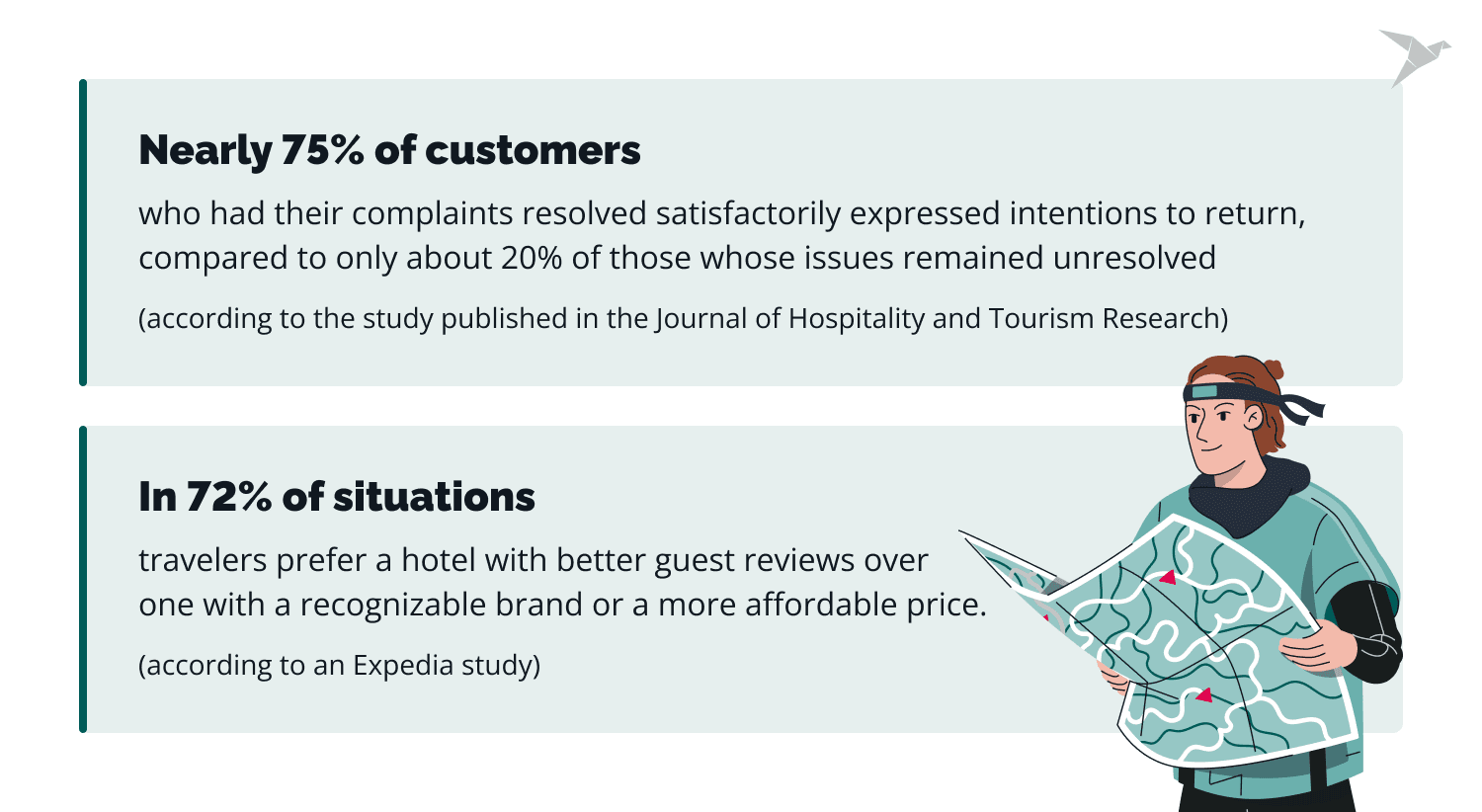
The pricing power here is measurable. An Expedia study reported that in 72% of situations, travelers prefer a hotel with better guest reviews over one with a recognizable brand or a more affordable price. Guests are willing to pay 35% more for a hotel rated 4.4/5 instead of one rated 3.9/5.
Half a star is worth a third of your rate. That is the clearest argument for spending on experience anywhere in the hotel industry.
Key Factors Influencing Guest Satisfaction
The guest journey starts before anyone reaches the lobby and continues after they have gone home. Each stage can undo the one before it.
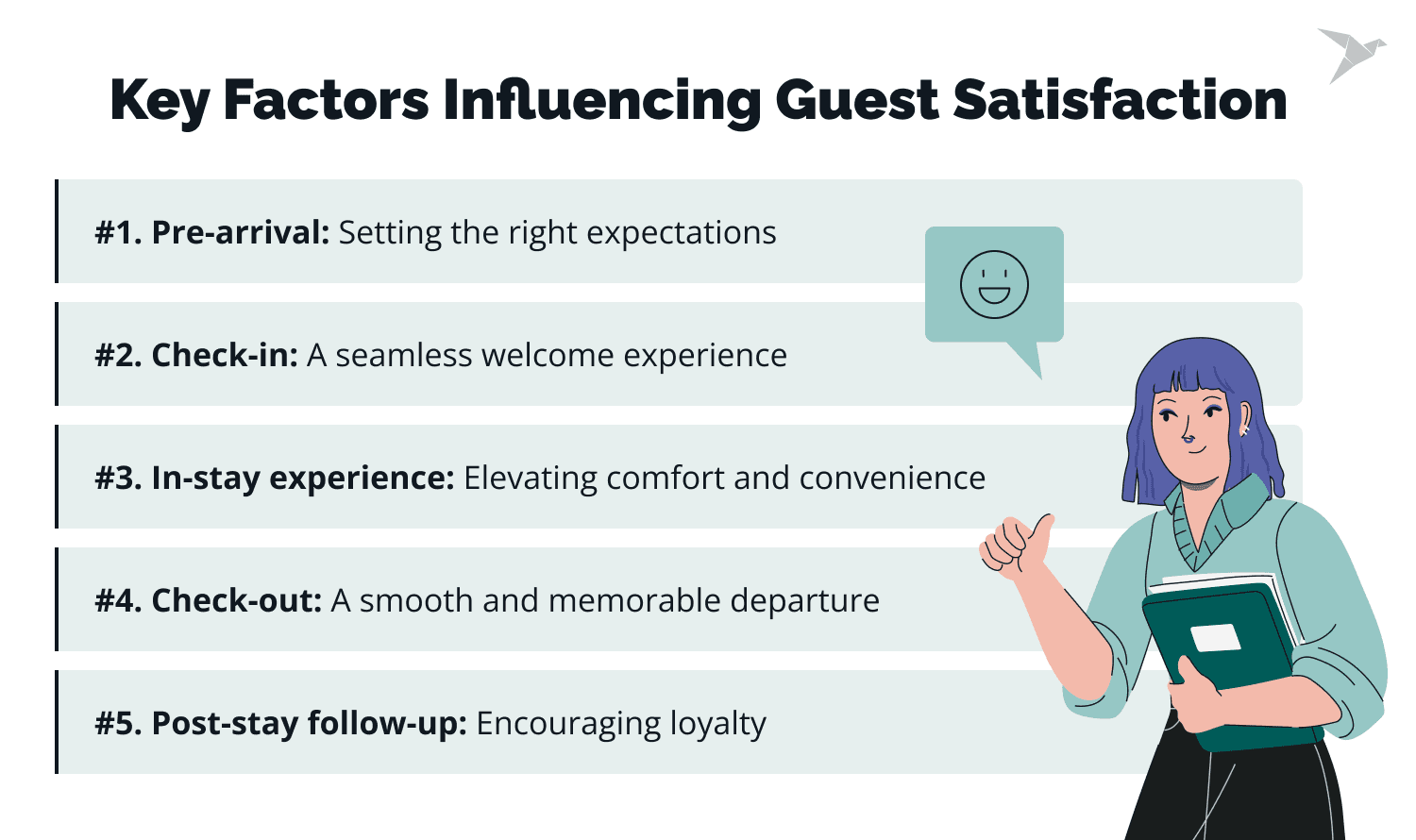
Pre-arrival
Booking is where the relationship starts, and where most of it is lost. A site that hides availability, mishandles a mobile screen, or asks for a payment method the guest does not use ends the conversation before it begins. Multiple payment options, including digital wallets and buy-now-pay-later, remove a category of abandonment that has nothing to do with your rooms.
Be plain about policies, amenities, and what costs extra. Guests forgive a resort fee they were told about and punish one they discover at check-out, so set guest expectations you can actually meet.
Then use what you know. A pre-arrival message can offer upgrade options, a dinner or spa reservation, and authentic local experiences matched to why the guest is coming. A couple marking an anniversary and a consultant billing hours need different messages, and sending the wrong one is worse than sending nothing.
Check-in
This is the first time a person from your hotel meets a person who has been travelling, and it sets the tone for everything after. Speed matters most here. Mobile check-in and keyless smartphone entry let a guest who landed at midnight go straight to the room, which is the single most appreciated thing you can offer a tired traveller.
Speed without recognition is a missed opportunity, though. A returning guest greeted by name registers it every time. A guest processed efficiently by someone who never looks up registers that too.
For a special occasion, something small and local lands better than something expensive and generic. A glass of lemongrass tea in Thailand, a bottle of wine in Italy: the point is that it could not have come from anywhere else.
In-stay
Comfort, cleanliness, and working plumbing are not achievements. They are the floor, and guests only notice them when they fail.
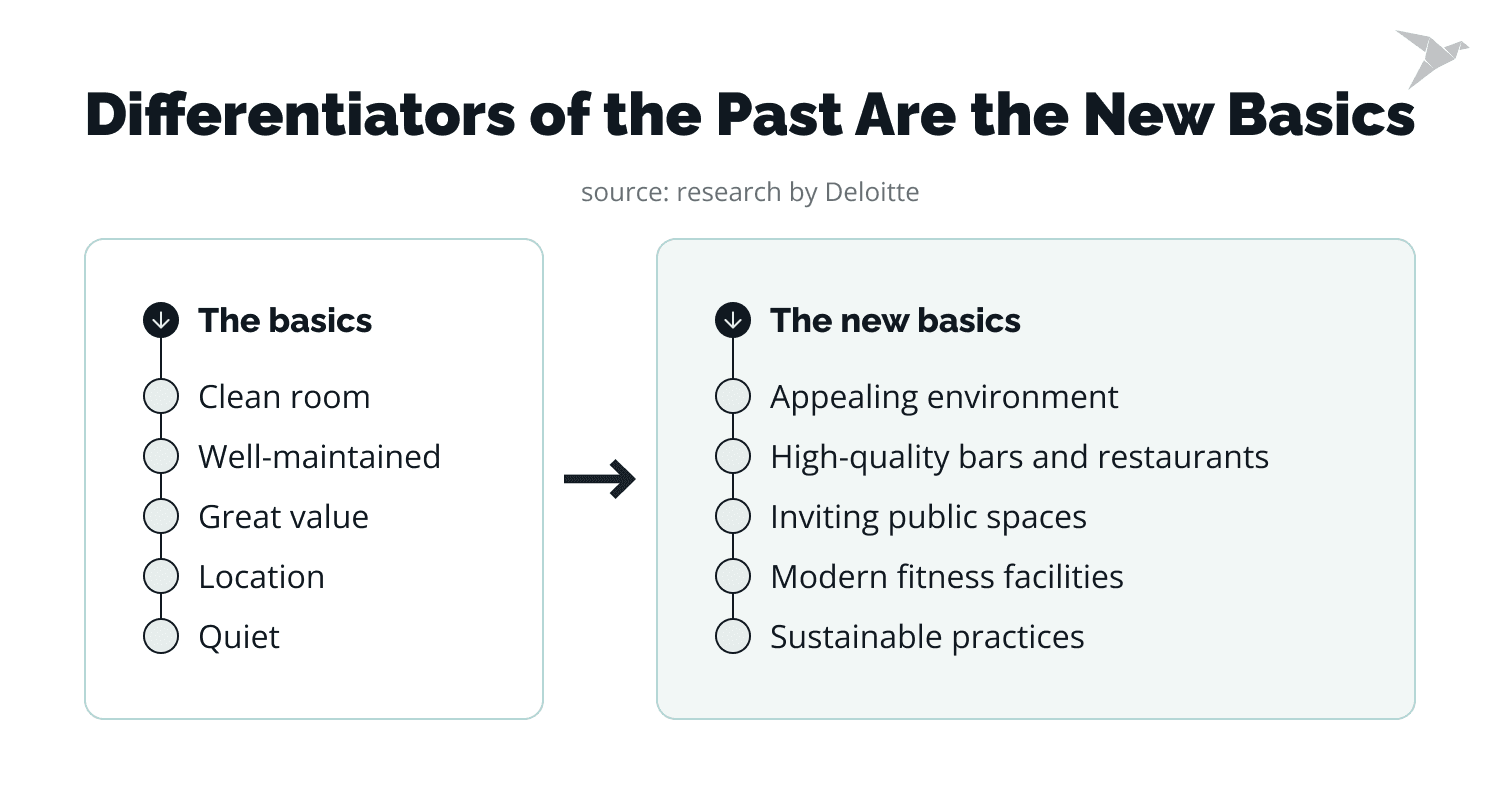
What separates hotels is anticipation. If a guest asked for extra towels last time, the towels are there this time and nobody had to ask. That takes a system that remembers guest preferences. Relying on one member of staff with a good memory works until their day off.
Smart room technology helps here, and hotel innovation of this kind is now common enough to be expected in the upper tiers. Voice or app control of lighting, temperature, and entertainment saves a guest hunting for a switch panel at 2am. IoT-enabled setups can carry settings across visits, so the room arrives at the right temperature.
A caution from experience: a smart room that a guest cannot work out is worse than a light switch. Every control needs an obvious manual fallback, because the guest who cannot turn off the lights at midnight will mention it in the review.
Staff matter more than any of this. A concierge who takes a bag before being asked, or a front desk agent who recommends a restaurant that actually suits a guest's dietary restrictions, does something no system does.
Check-out
Departure should be quick. Digital check-out with automated billing and receipts gets a guest to their taxi without queueing behind a group tour.
A goodbye message by email or a note in the room costs nothing. A discount or loyalty benefit for the next stay costs something and drives repeat bookings, which is the cheapest revenue in the building. A free upgrade or early check-in next time is worth more to a returning guest than a fruit basket now.
Post-stay follow-up
The relationship does not end at the door. A thank-you email lands well. Loyalty rewards, bonus points, or a personal discount give a reason to book direct next time instead of through an OTA that takes a cut.
Targeted follow-ups drive repeat business. A guest who booked spa options once is the right audience for a wellness offer, and the wrong audience for a family package.
Ask for feedback, and then do something visible with it. Post-stay surveys tell you what broke. A hotel that upgrades its Wi-Fi after a run of complaints and says so has turned a weakness into evidence that it listens.
Physical, Digital, and Emotional Guest Experience: Finding the Right Balance
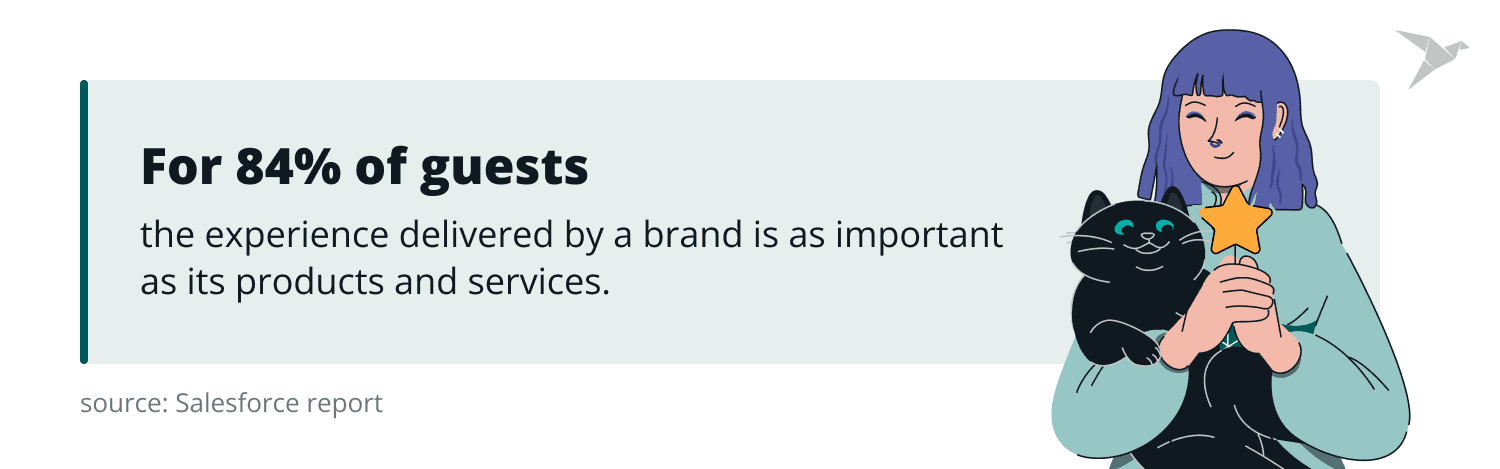
For 84% of guests, the experience delivered by a brand is as important as its products and services, according to a Salesforce report.
A stay people remember comes from three layers of customer experience working together. Any one of them can sink the other two.
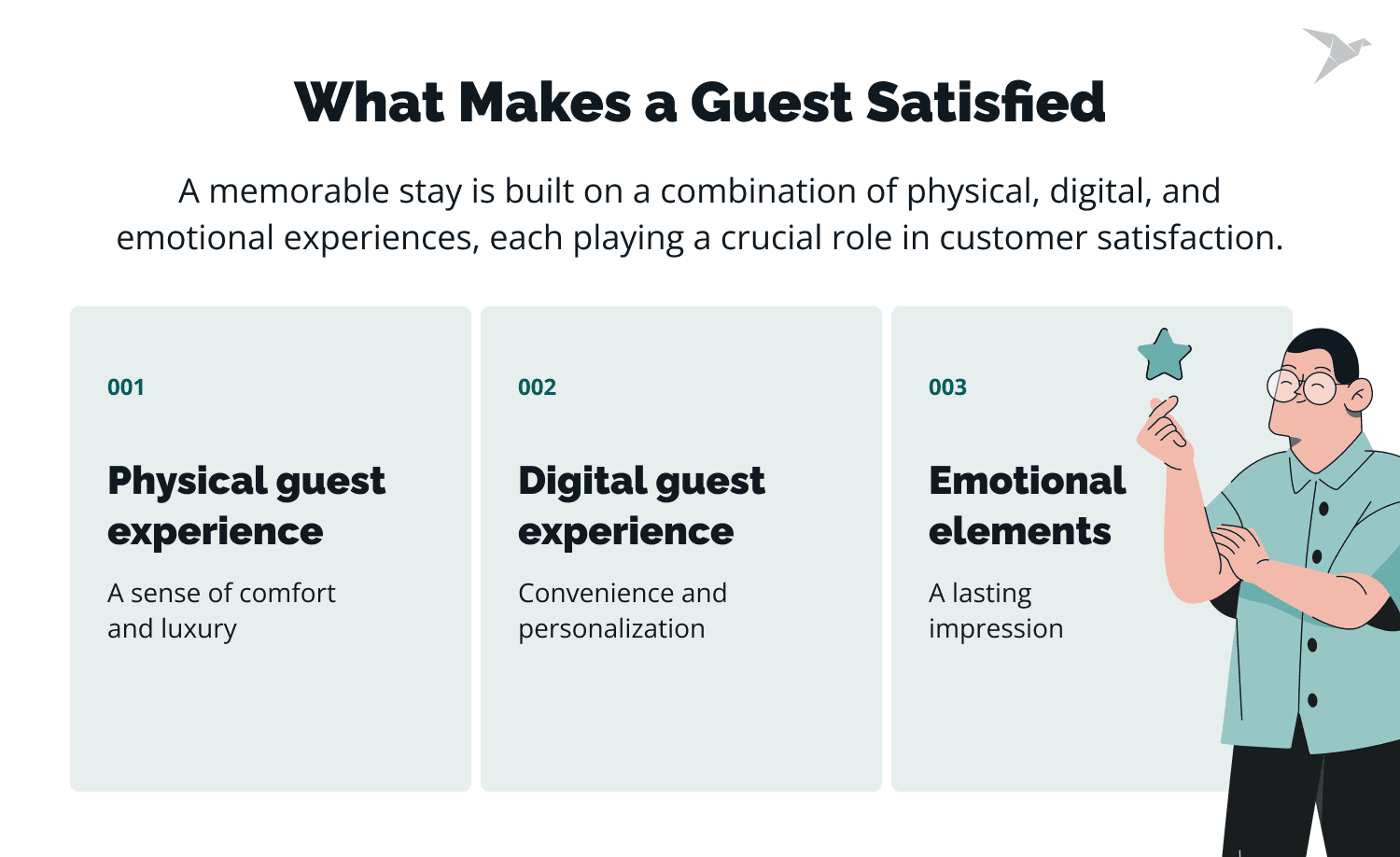
Physical guest experience
No amount of technology fixes a bad room. Guests still judge quality, cleanliness, and the state of the amenities first. Crisp linens, furniture that works for a person sitting in it for three hours, soft lighting, curtains that actually black out a room: these are the things that decide whether someone sleeps.
The facilities carry the hotel brand as much as the rooms do. Restaurants and bars are part of the identity, which is why a locally inspired menu or a signature cocktail does more for you than a competent buffet. Spas, gyms, and pools add a reason to stay in. Guided tours, excursions, and live entertainment give a guest a story to tell about where they stayed.
In-person service is where physical becomes personal. A small toy handed to a child at check-in is remembered by the parent for years.
A luxury resort might assign a personal concierge for the whole stay. A boutique property gets a similar effect from a welcome gift and a room set up the way the guest likes it, at a fraction of the cost.
Digital guest experience
Digital work should be invisible. Contactless check-in, mobile keys, and AI chatbots exist so a guest can deal with the hotel on their own schedule and skip the front desk queue.
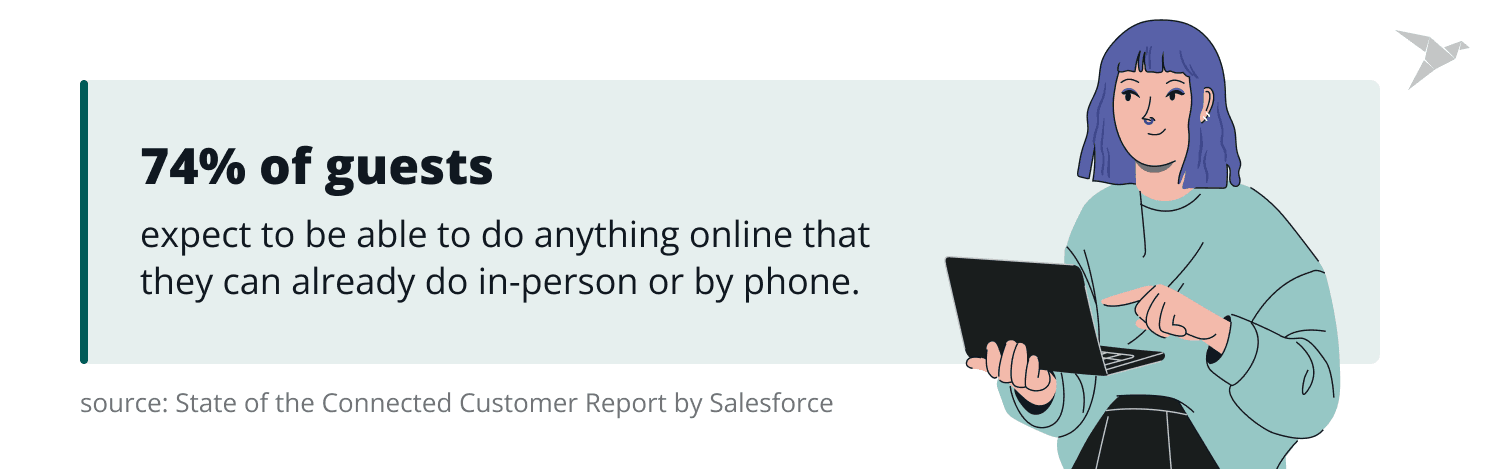
Salesforce found that "74% of guests want to have the possibility of completing tasks that they can do face-to-face – online." That number is the whole argument for self-service, and it keeps climbing.
Automated service requests are the everyday version. These allow guests to order room service, ask for towels, or book a spa slot from a phone without calling anyone. Smart room integrations let them set the room with a tap or a voice command.
Personalization is where digital earns its keep. Recommendation systems read guest preferences and suggest dining, local attractions, or hotel services that fit. A guest who did a wine tasting last visit is a reasonable target for a new vineyard experience.
Used carelessly, the same data reads as surveillance. There is a line between a hotel that remembers your coffee order and one that seems to know too much, and guests notice when it is crossed. Personalization should feel like being recognized rather than being tracked.
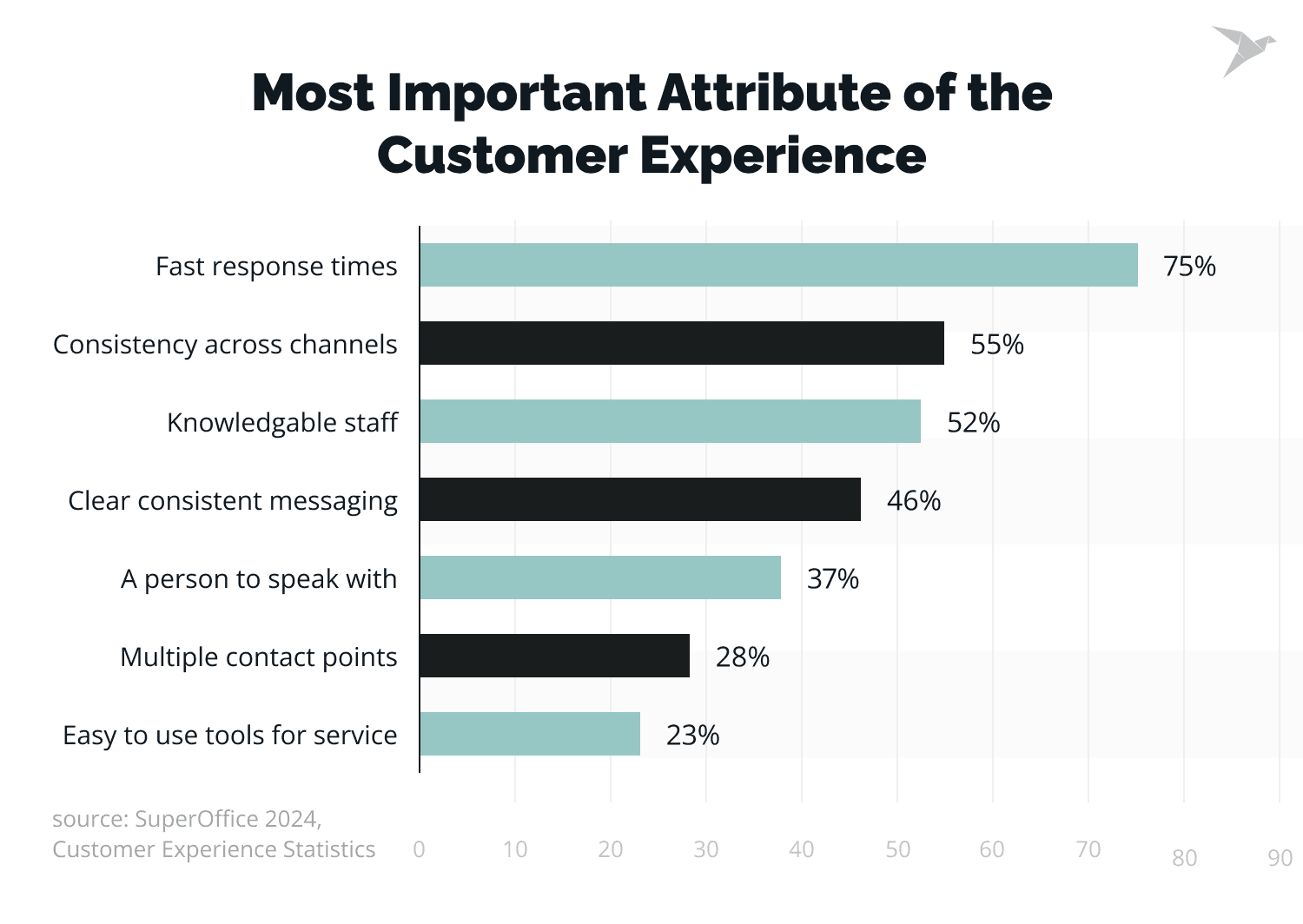
Let's also take a look at the results of the survey on the most important attributes of customer experience:

Emotional elements
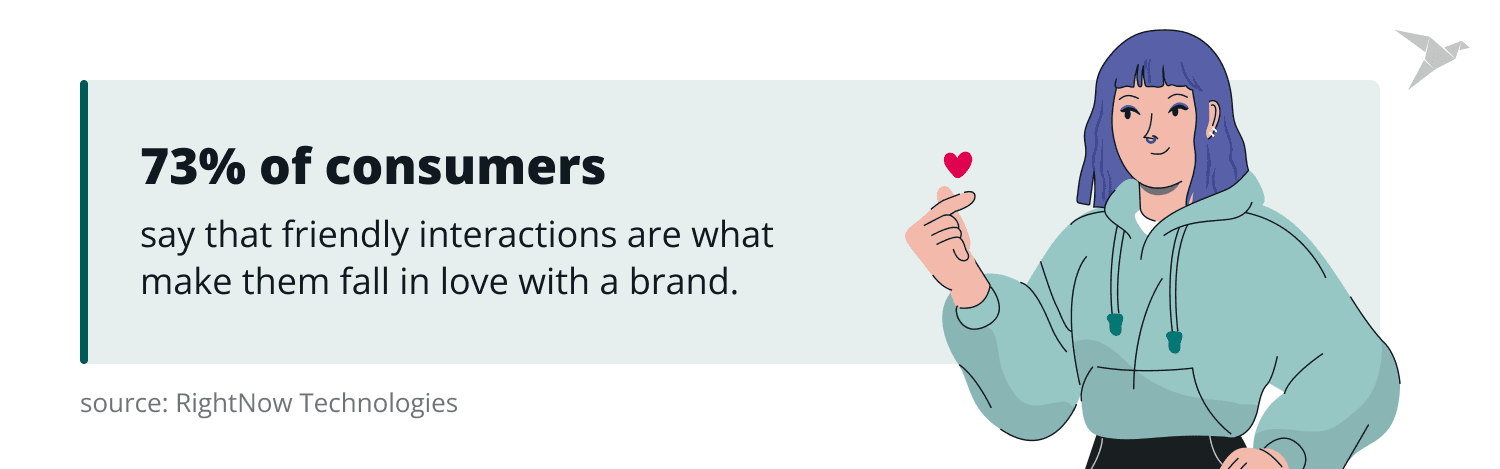
The emotional layer decides whether a guest is merely satisfied or actually loyal. A real greeting at the desk, staff who seem to like working there, and a consistent atmosphere are what people describe when they recommend a hotel to a friend.
Consistency in branding does the quiet work. Tone of communication, interior design, service style: a hotel known for restrained elegance should feel that way in its confirmation email, and a young, loud property should not suddenly go formal at check-in.
Then there are the surprises. A complimentary dessert for a birthday, an upgrade for a loyal guest, something unearned and unexpected. These are what get written about, and they cost less than the marketing they generate.
Get all three layers right and the stay is efficient and warm at the same time. In 2026, the hotels pulling ahead are the ones treating technology and human contact as one system rather than two budgets.
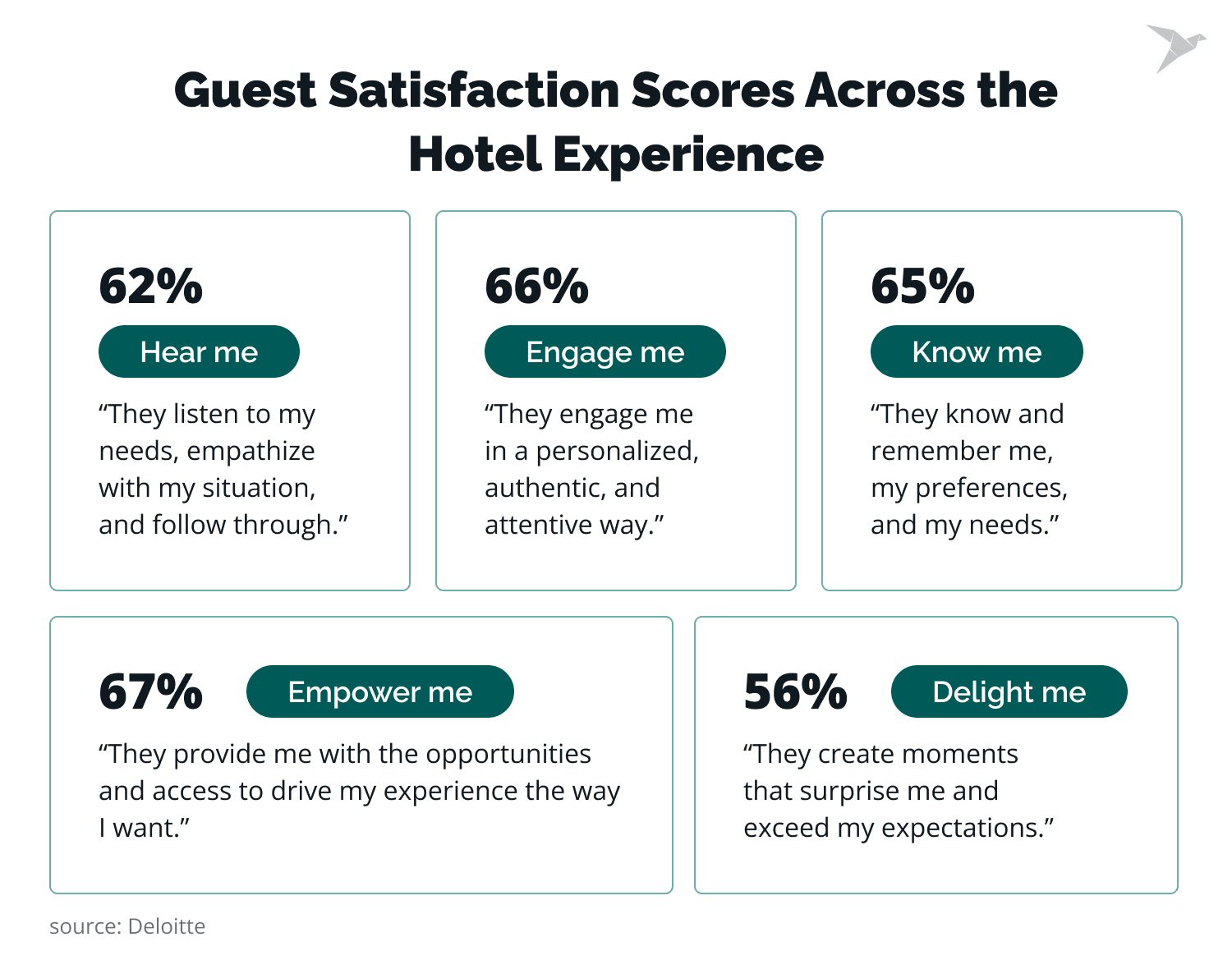
Guide To Improving Hotel Guest Experience: A Strategic Approach
Six steps, in order. Work them in sequence to enhance hotel guest experience without spending on the wrong layer first. The hotel guest experience examples in each step come from named properties rather than hypotheticals.
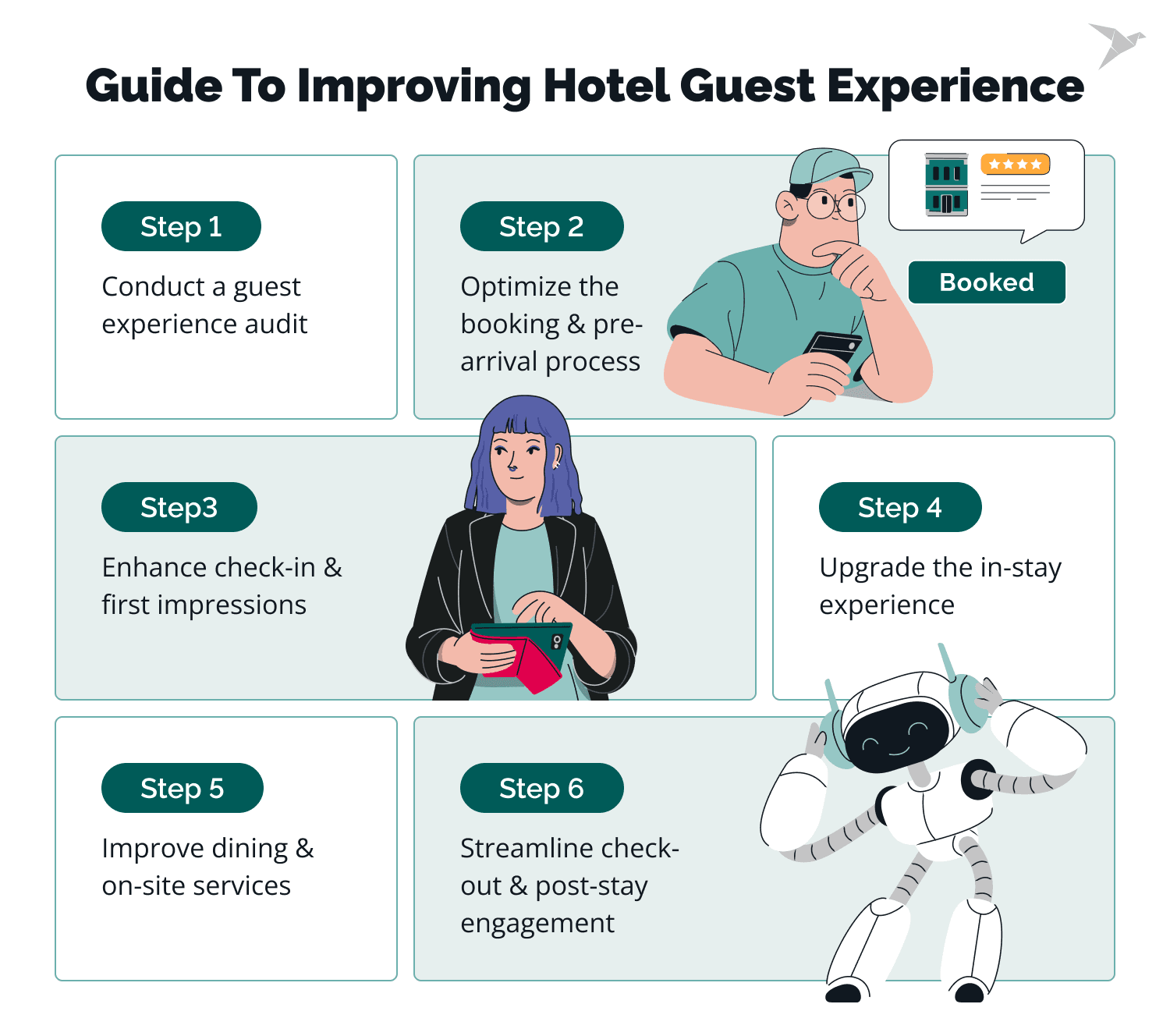
Step 1: Conduct a guest experience audit
Start with the experience you deliver today rather than the one in your brand guidelines. Pull direct feedback, online reviews, and post-stay surveys together and look for the complaint that repeats. AI sentiment analysis is useful at volume, because a hundred reviews saying "fine" and four saying "the restaurant took an hour" is a pattern a human skims past.
Mystery shopper or secret guest programmes find what your own staff cannot see. Slow restaurant service, housekeeping that misses the same thing twice, a front desk that behaves differently on the night shift.
Hilton runs AI-driven review analysis across its global properties, which lets it spot delays and housekeeping problems at one hotel before they become a pattern across a region. Expect this step to be uncomfortable. An audit that returns nothing wrong was not an audit.
Step 2: Optimize the booking & pre-arrival process
Fix the booking flow first, because everything downstream depends on the guest getting through it. Mobile-first site, real-time availability, multiple payment methods, and self-service booking management. Every friction point here is a reservation someone abandoned.
AI chatbots cover the 24/7 questions that used to go unanswered overnight, and they can surface an upgrade at the moment a guest is already deciding. Let guests choose room layout, pillow type, or minibar contents before arrival, so the room is theirs before they see it.
Virtual concierge services extend that. A guest can browse amenities, book spa treatments, or arrange an airport transfer from the app days ahead.
Four Seasons Hotels & Resorts built its app around direct messaging with staff, so requests and arrangements happen in conversation before check-in rather than at the desk. Guests feel looked after before they arrive, which is the whole point of pre-arrival work.
Step 3: Enhance check-in & first impressions
Make the check in process short and the welcome real. Digital check-in and keyless entry remove the queue; trained front desk staff give the guest a reason to remember arriving. Both, or neither works.
First impressions are cheap to improve. A local treat, a drink, a signature arrival ritual like a short tea ceremony or a cocktail tasting. What matters is that it is specific to your property, because a branded souvenir from a hotel that could be anywhere says nothing.
Step 4: Upgrade the in-stay experience
Smart room technology only pays off when it remembers. A system that carries preferences across stays turns a returning guest's room into their room.
Wellness features have moved from luxury to expectation for a large slice of travellers: air purification, noise reduction, fitness-on-demand. Sleep is the product most guests are actually buying, so aromatherapy diffusers and a real pillow menu are not frivolous.
Train staff to work from the preference data rather than around it. Herbal tea waiting at breakfast for the guest who orders it every morning is a small thing that reads as attention.
The Wynn Las Vegas put AI voice assistants in guest rooms, so room settings and service requests happen by speaking rather than by finding the right menu.
Step 5: Improve dining & on-site services
Food is where hotels quietly lose their rating. Contactless room service with real order tracking removes the worst part of it, which is not knowing whether the food is coming.
AI dining recommendations can match menu items to preferences and dietary restrictions. Beyond that, sell what the location gives you: themed dining nights rooted in local culture, cooking classes, wine tastings that a guest could not book at home.
The Peninsula Hotels does this properly, building curated local excursions and food experiences around guest interests. A guest who cares about Japanese cuisine gets a sushi-making class with a chef, which is a memory rather than a meal.
Step 6: Streamline check-out & post-stay engagement
Departure should be fast. Digital check-out and automated receipts, and a feedback prompt while the stay is still fresh, because a survey three days later gets the polite version.
Then keep the relationship going. A personalized thank-you, loyalty benefits, and promotions built on what the guest actually did. A discount on the spa treatment they booked last time will outperform a generic offer every time.
Marriott Bonvoy runs post-stay follow-ups against travel habits and preferences, so the offer a guest receives has some connection to how they travel.
Expert Tips: Best Practices to Enhance Guest Satisfaction
Six practices that separate hotels which manage guest experience from hotels which talk about it.
Create signature experiences that differentiate your hotel
Build something a competitor cannot copy by writing a cheque. Rooftop yoga with a view only you have, a themed cocktail hour with a live band, an art installation guests photograph. These work because they are yours, and the social sharing they generate is marketing you did not buy.
Provide multiple communication channels for guest convenience
Guests will contact you however they contact everyone else. Email, chat, phone, WhatsApp, social. Being unreachable on the channel a guest tried is what turns a small problem into a review.
Multilingual support widens that further, whether through tools or staff who speak the languages your guests do. Real-time WhatsApp updates on check-in and chat-based concierge both get used heavily once they exist.
Use data to anticipate guest needs and personalize interactions
A CRM that tracks preferences, behaviour, and booking history is what makes anticipation possible at scale. Preferred room settings, curated local recommendations, a pre-arrival gift that reflects the last visit.
Targeted campaigns work on the same data: a discount for returning travellers, an upgrade for loyalty members. Done well, this creates a positive guest experience and builds customer loyalty. Done from stale data, it produces the offer that reminds a guest you got their name wrong.
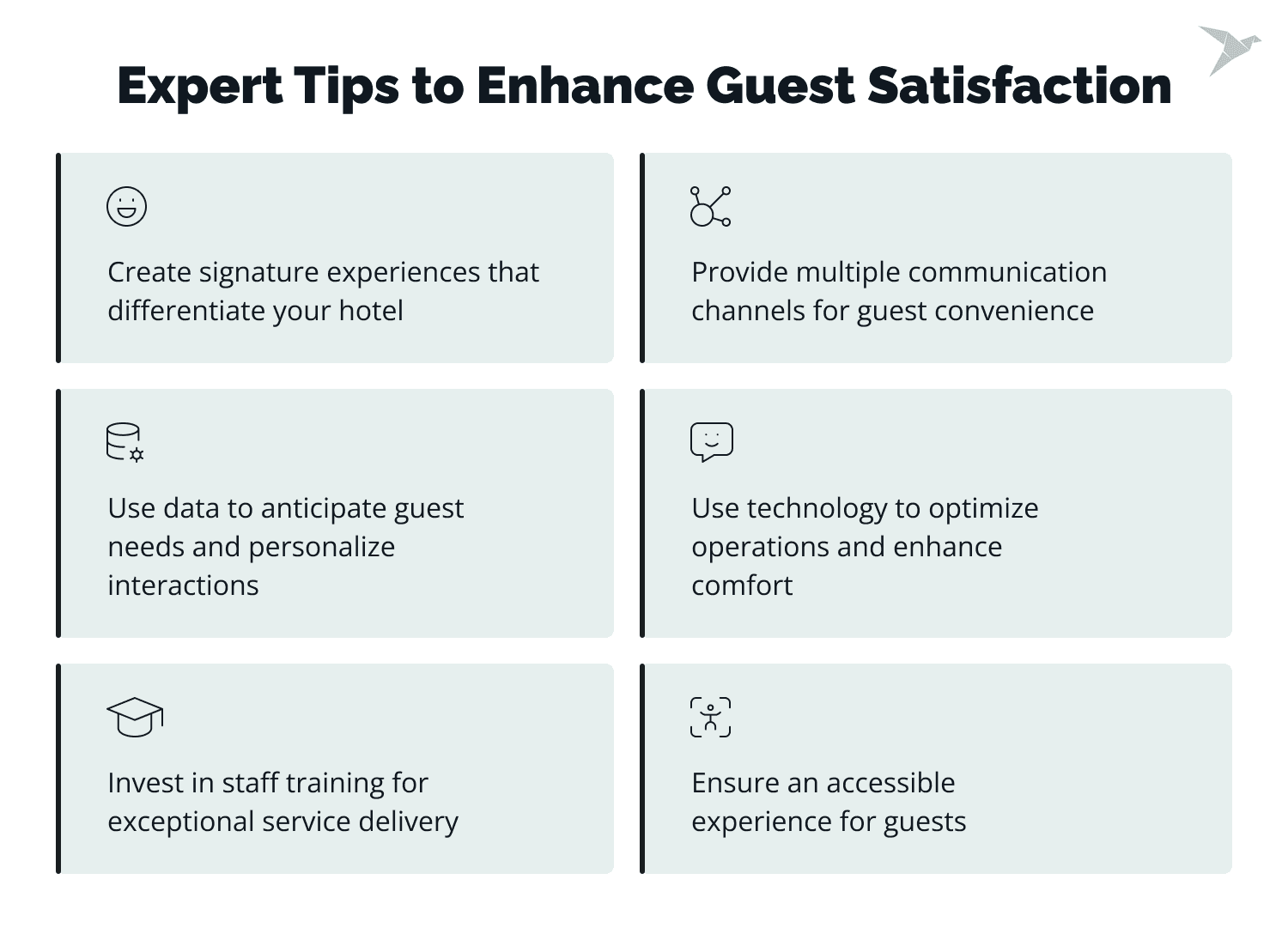
Ensure an accessible experience for guests
Accessibility is where properties quietly fail their own standards. Wheelchair-accessible rooms, visual and auditory aids, allergy-aware menus, and staff trained to handle different needs without making it awkward.
Tactile maps for visually impaired guests, gluten-free and halal options as standard rather than on request. These are inexpensive, and the guests who need them remember which hotels bothered.
Invest in staff training for exceptional service delivery
Every system above is delivered by a person. Training should cover anticipating needs, handling complaints, and the judgment to know which is which.
Give staff the authority to fix things on the spot. A front desk agent who can approve an upgrade to resolve a complaint solves it in a minute; one who has to find a manager turns it into the story the guest tells later. Recognize the people who do this well, or they leave.
Use technology to optimize operations and enhance comfort
Automated check-in, mobile keys, smart room controls, and chatbots for the questions that arrive at 3am. The point of all of it is to move staff time from processing to people.
That only holds if the technology works. Every hour of integration failure lands on the front desk, so hotel operations and the tech stack have to be planned as one thing.
Who Should Be Involved? Internal & External Contributors
No single department owns guest experience, which is why it usually falls between them. Here is who holds which piece.
Internal teams: Driving operational excellence
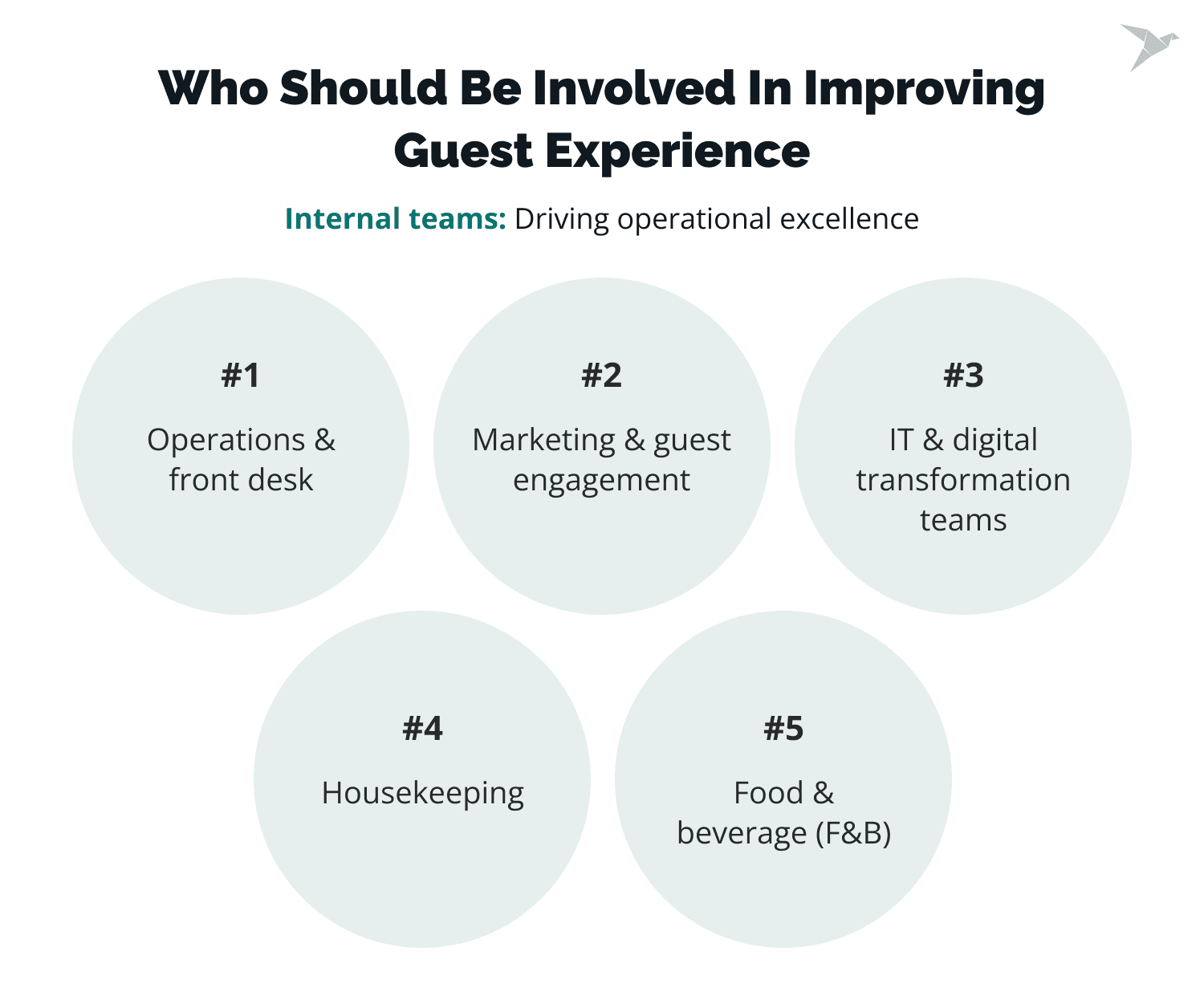
Operations & front desk
First contact, and the team with the most chances to fix or break an impression. Give them guest profile data at the desk and they can greet by name and suggest the upgrade or the restaurant that fits. Without it, they are reading a screen.
Housekeeping
Cleanliness is where a hotel gets no credit and unlimited blame. Scheduling software and inventory management keep the workflow sane, and predictive maintenance catches the plumbing problem before a guest finds it.
IT & digital transformation teams
They own whether any of the technology in this article actually works together: IoT rooms, contactless check-in, chatbots, and the connections between them. They also own guest data protection, which in this industry is a legal exposure rather than an IT preference.
Marketing & guest engagement
Guest engagement runs on segmentation. CRM and analytics let this team send the spa offer to people who book spas, manage the hotel brand across social channels, and handle reputation when a review needs a reply.
Food & beverage (F&B)
F&B shapes more of the review score than its budget suggests. Chef-led tastings, locally sourced dishes, and menu suggestions that reflect what a guest ate last time.
External partners: Bringing expertise and innovation
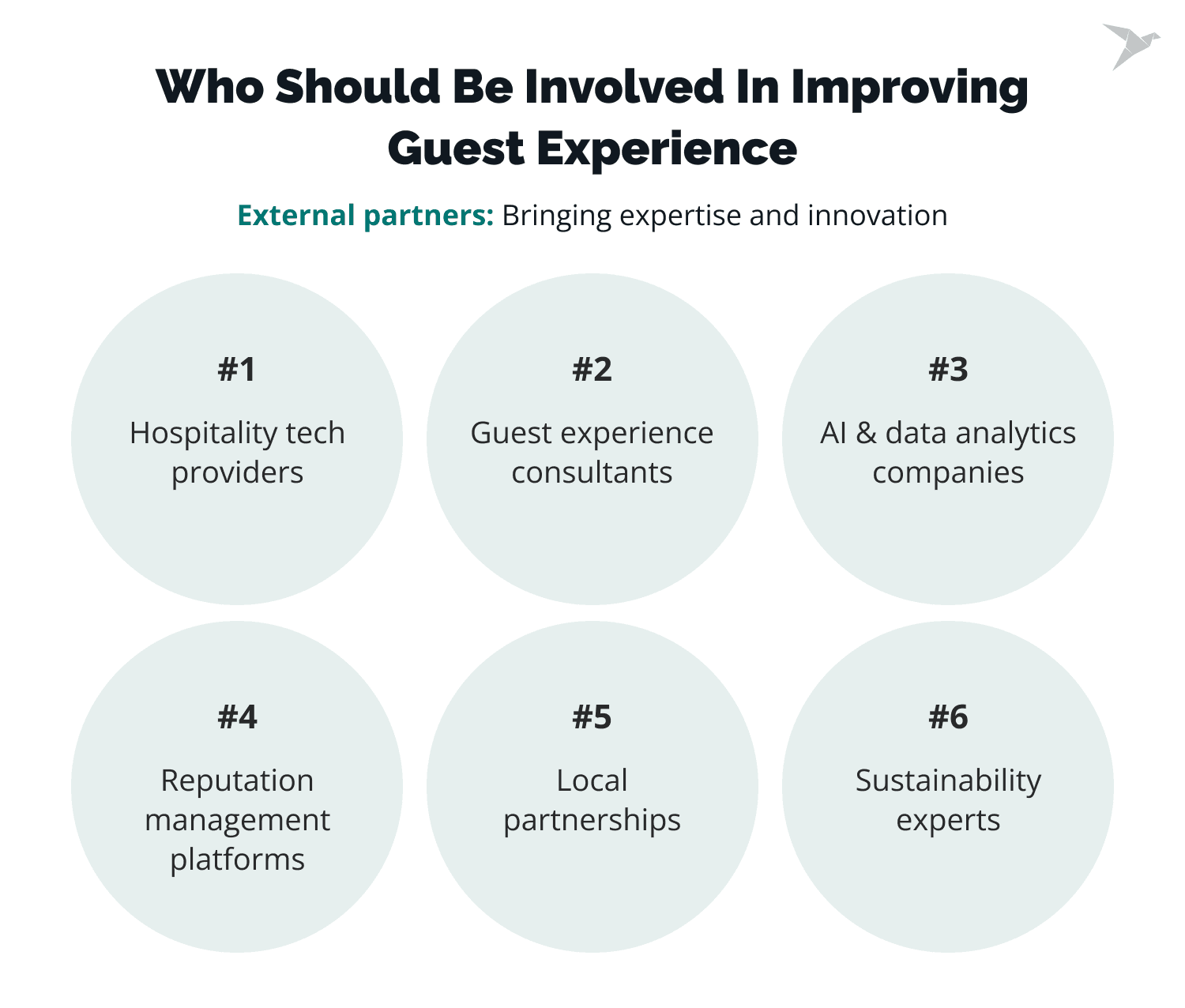
Hospitality tech providers
They supply the chatbots, smart room controls, and mobile key systems, and more importantly they own the integration work and the support afterwards. A good one tells you which of your existing systems will fight the new one.
Guest experience consultants
They audit what you are too close to see, find the pain points, and recommend the fix. Useful for a second opinion on a check-in flow or a training programme.
AI & data analytics companies
These partners turn guest behaviour into forecasts you can staff against, whether that is adding spa capacity or scheduling more people for a peak week.
Reputation management platforms
They collect reviews from every channel, analyse sentiment, and tell you what is repeating. A platform surfacing three months of Wi-Fi complaints is how a connectivity budget gets approved.
Local partnerships
Tour operators, artisans, and event organizers give guests access to a place rather than a building. It is also the cheapest way to offer something genuinely local.
Sustainability experts
Travellers increasingly check this before booking. Energy reduction, biodegradable toiletries, local sourcing. Worth doing properly, since guests are quick to spot a towel card standing in for a policy.
Bridging internal and external contributions
None of this works if the two groups run separately. IT and the tech provider have to implement smart rooms together. Marketing and the analytics partner have to agree what a segment means. Shared metrics and a regular check-in are unglamorous and they are what keeps a guest experience programme from becoming a set of disconnected projects.
How TechMagic Can Help
Most guest experience projects stall in the same place. The idea survives the pitch, then meets a property management system from 2011, three vendors who will not integrate, and a security review nobody scheduled.
We do full-cycle software development, AI solutions, and cybersecurity, which covers building the booking platform or custom system and connecting it to what you already run. Integration is usually the larger half of that work, and it is where these projects tend to overrun.
On the security side, guest data carries real regulatory exposure and hotels are a frequent target. Our team can test what you have built and tell you where it is weak before someone else finds out. We will also tell you when a project does not need building yet.
If you are scoping something in this space, our hospitality software development is the place to start.

FAQ

Fix the sequence rather than one touchpoint. A booking process that works on a phone, a check-in that does not involve queueing, and a room that remembers the last stay, with staff who are freed up to do the human part. Most hotels have one or two of these and lose the benefit at the weakest link.
Convenience and recognition, in that order. Guests expect self-service to work without asking anyone, and then they want the parts that involve people to feel like people. Efficiency earns you no complaints, and being recognized earns you the return booking.
Through anticipation, mostly. Every stage of the guest journey is a chance to know something before the guest has to say it, from the pre-arrival message to the offer after they leave. That is what builds customer satisfaction into loyalty rather than a single good review.
