 Software Development
 Security Services
 Cloud Services
 AI Services
 Other Services















 TechMagic Academy


8 Steps of Building a Security Operations Center
Last updated:3 March 2025



Imagine waking up to discover that your company’s entire database has been breached, exposing sensitive customer data to cybercriminals. For many businesses, this nightmare scenario is a harsh reality.
Cyber threats are developing, and they're doing it really fast. Without a dedicated team monitoring security incidents, businesses are left vulnerable. According to Gartner, organizations without a dedicated Security Operations Center (SOC) are significantly more likely to suffer major security breaches. So, how can businesses stay ahead? The answer lies in building a robust SOC.
Key takeaways
- A SOC protects your business around the clock. It detects, contains, and prevents security breaches before they turn into serious damage.
- A SOC is three things working together: skilled people, clear processes, and the right technology, like SIEM and EDR. All three have to hold for your defense to work.
- You have four models to choose from: in-house, managed, hybrid, and virtual. Each one balances cost and control differently, so pick the one that fits your budget and your risk.
- Cost varies a lot. An in-house SOC runs $1 million to $5 million a year, while a managed SOC usually starts at $5,000 to $50,000 a month, and you pay only for what you use.
- Building a SOC follows clear steps: define your strategy, assemble the team, choose the technology, and keep testing and improving as threats change.
- A well-planned security operations center design strengthens your defenses and keeps you compliant, without the overhead of building everything in-house.
What is a Security Operations Center (SOC)?
A Security Operations Center (SOC) is a centralized team or facility (physical security hubs or virtual) responsible for continuously monitoring, detecting, analyzing, and responding to cybersecurity incidents. It acts as the frontline defense against cyber threats by integrating people, processes, and security technologies to safeguard an organization's digital assets. SOC teams work around the clock to ensure timely identification and mitigation of threats before they can cause significant damage.
SOCs have evolved from military and government security centers in the 1970s into essential cybersecurity command hubs for businesses today. Initially developed to counter early cyber threats, SOCs gained prominence in the 1990s as financial institutions implemented intrusion detection systems.
As cloud computing and IoT adoption surged in the 2010s, SOCs adapted to secure sprawling digital infrastructures and third-party dependencies. Today, they employ AI, machine learning, and automation to detect and respond to cyber threats proactively. Modern SOCs go beyond incident monitoring; they use the latest threat intelligence and advanced analytics to mitigate risks and ensure long-term cyber resilience.
A Gartner report highlights that organizations with a Security Operations Center detect and mitigate security threats 80% faster than those without one.
How Does a Security Operations Center Work: Core Functions
A Security Operations Center is basically the nerve center of the cybersecurity strategy. In practice, it continuously monitors, detects, and responds to security threats to protect your business assets and data. Here's a short breakdown of how it operates.
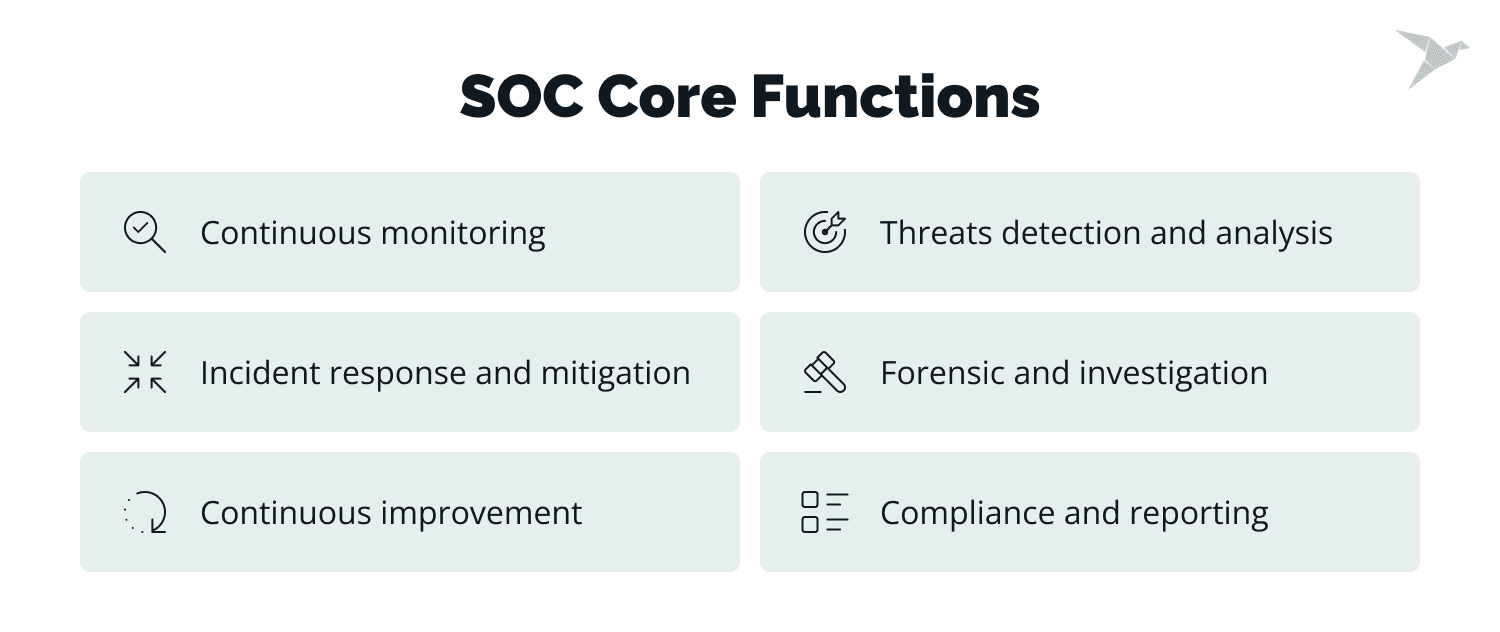
Continuous monitoring
A SOC runs 24/7. It keeps a close watch on critical infrastructure, network traffic, system logs, and user activity. Real-time analytics flag unusual behavior before it grows into a serious incident.
For example, say an employee account starts downloading gigabytes of files at 3 a.m. from a new location. The SOC catches it and looks closer, instead of finding out weeks later.
Existing and emerging threats detection and analysis
SOC teams rely on advanced security tools like Security Information and Event Management (SIEM) systems and Endpoint Detection and Response (EDR). These run security analytics and spot suspicious activity.
Analysts also pull threat intelligence from several sources to understand attack patterns and vulnerabilities. For instance, when a new strain of ransomware starts hitting companies in your industry, the team can look for its traces in your environment before it reaches you.
Incident response and mitigation
When a potential security incident shows up, the SOC follows a structured response plan: isolate the affected systems, analyze the attack, and put countermeasures in place to stop the spread. Say a single laptop gets infected. The SOC can cut it off from the network within minutes, so one compromised device does not turn into twenty.
Forensic and investigation
Once the threat is contained, the SOC digs into what happened. A forensic analysis finds the root cause. Teams gather digital evidence, rebuild the attack timeline, and identify the security gaps that let the attacker in. This way, a one-time incident turns into a fixed weakness, so the same gap does not get used twice.
Compliance and reporting
SOCs log and document security events. That gives you the proof you meet regulatory requirements. They also produce compliance reports for frameworks like GDPR, HIPAA, and ISO 27001, which keeps you audit-ready. For example, if an auditor asks who accessed patient records last March, the SOC can pull the logs and show exactly that, with no frantic scramble.
Continuous improvement
Cyber threats mature, change, develop, and so must SOC operations. Regular training, simulated attacks, and system upgrades help improve response strategies and overall cybersecurity resilience.
What are Key SOC Models?
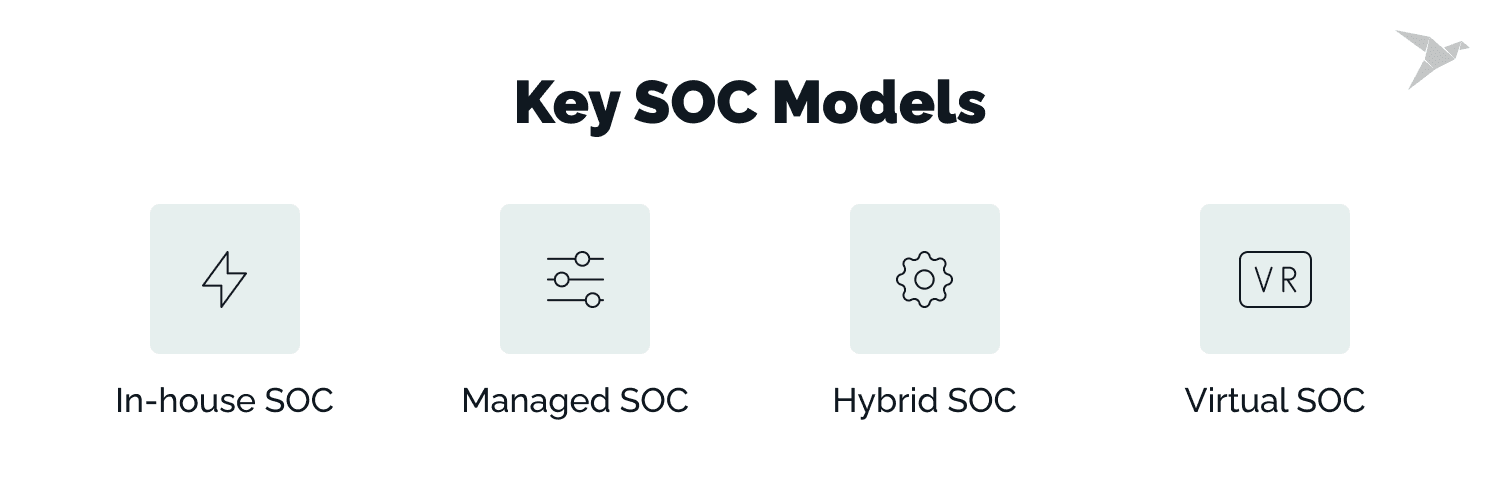
Security Operations Centers can be set up in different ways, and each option has its own benefits and pitfalls. To make the right choice, weigh your budget, your in-house skills, and how much control you want to keep. These four models cover most cases.
In-house SOC
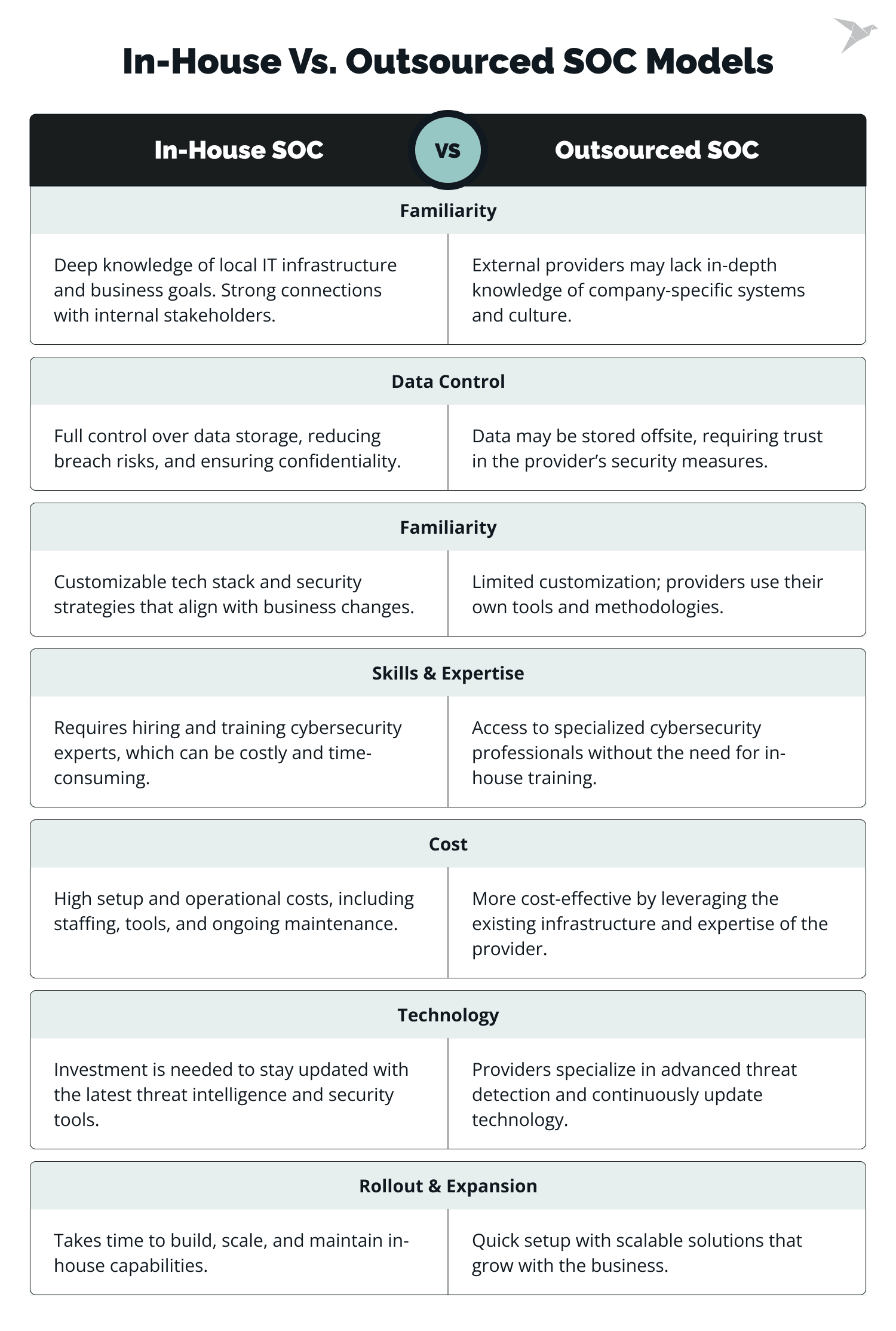
In the case of an in-house SOC, you build and run the whole thing yourself. That gives you full control over security operations and a setup shaped around your own systems.
However, the biggest trade-off is cost. You pay for the technology, the staff, and the infrastructure, etc., and you keep paying to run them.
Managed SOC
In managed SOC, a third-party provider runs the SOC for you. It might suit you if your business doesn’t have deep cybersecurity expertise in-house, or if you want to keep operational costs down. You still get 24/7 monitoring and incident response, backed by advanced security tools you would otherwise have to buy and maintain.
Hybrid SOC
A hybrid SOC splits the work. Your own team handles the critical security functions, while a provider covers the rest through managed SOC services. You keep control where it matters for you and add outside expertise and scale where you need it. For example, your team might own incident response while the provider watches the network around the clock.
Virtual SOC
A virtual SOC has no dedicated physical space. It runs on cloud-based security tools and remote analysts who monitor threats from anywhere. This keeps costs down and works well for companies with a dispersed workforce, or if most of your systems are already in the cloud.
Why Businesses Need a SOC: Key Benefits
Most businesses will face a serious cyberattack at some point. The real question here is whether you catch it early or find out the hard way. A well-run security operations center design tips the odds in your favor, and here is what you get.
Minimized downtime and financial losses
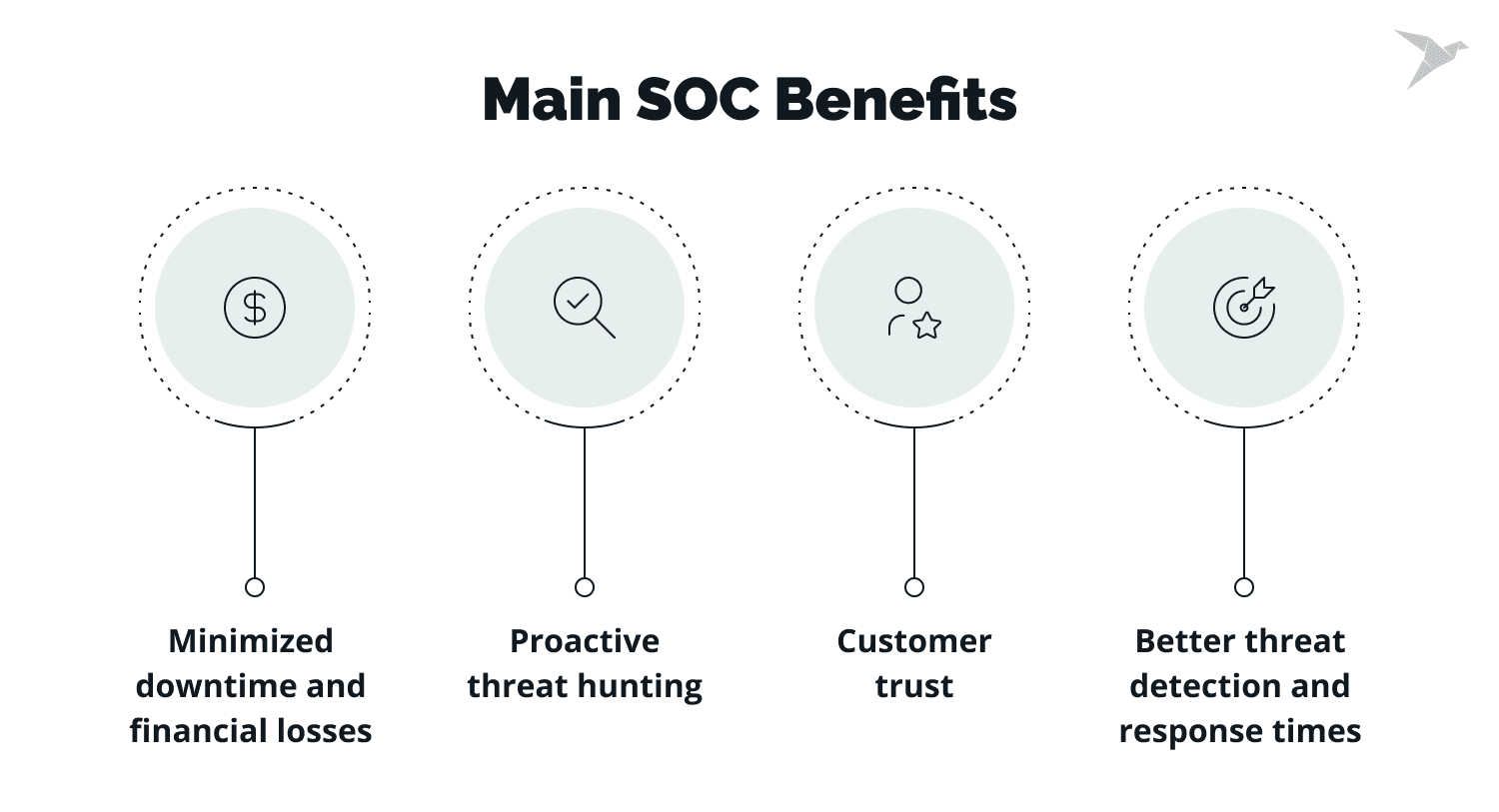
A single cyberattack can trigger costly downtime, expose you to a data breach, and, what is also concerning, do real reputational damage. Each of those things costs you money. A SOC detects and neutralizes threats before they escalate, so you keep the business running instead of firefighting. Want to protect your assets? Then build SOC.
Better threat detection and response times
SOC teams use advanced security tools, automation, and AI-driven analytics to detect and respond to threats in real-time. This reduces the mean time to detect (MTTD) and mean time to respond (MTTR), minimizing the impact of security incidents.
Proactive threat hunting
Instead of waiting for an attack, SOC analysts engage in proactive threat hunting to identify vulnerabilities and address them before they can be exploited.
Customer trust and better brand reputation
Customers expect businesses to safeguard their personal and financial data. A SOC demonstrates a proactive approach to cybersecurity, enhancing trust and credibility.
How to Build a Security Operations Center in 8 Steps
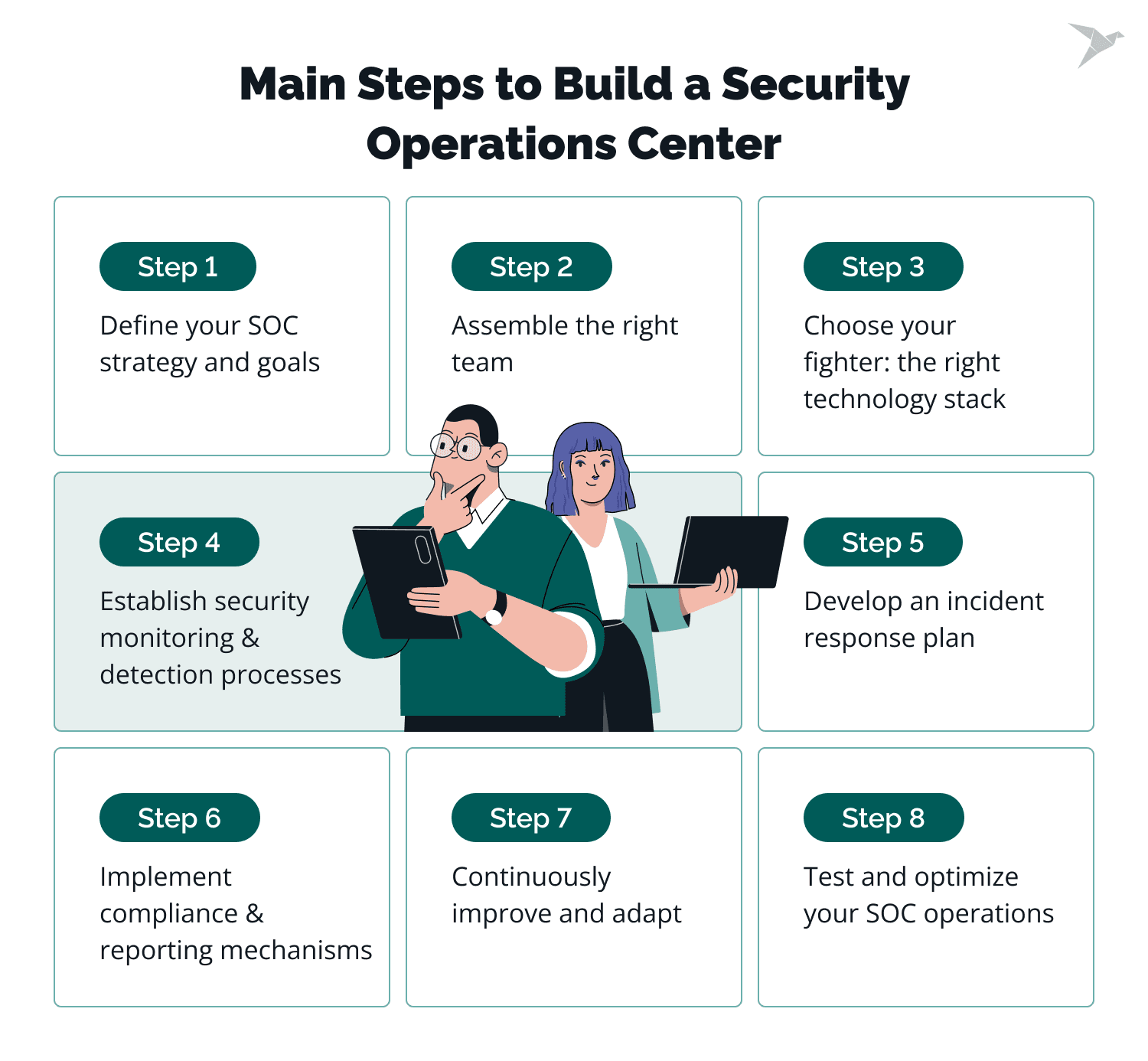
Setting up a Security Operations Center might sound complex. However, we see in practice that with the right plan, it turns into a clear, step-by-step process. A well-built SOC keeps your business ahead of cyber threats and helps you stay compliant. Here is how the process looks in general.
Step 1. Define your SOC strategy and goals
The first and most important part of how to build a SOC is knowing what you're defending. Run a risk assessment and ask a question: what are you protecting, and from whom?
From there, you can map your most valuable digital assets, your critical systems, the risks you face, and the regulatory requirements you have to meet. A clear SOC strategy keeps you focused on what matters most, so you don't stretch your team too thin.
Step 2. Assemble the right team
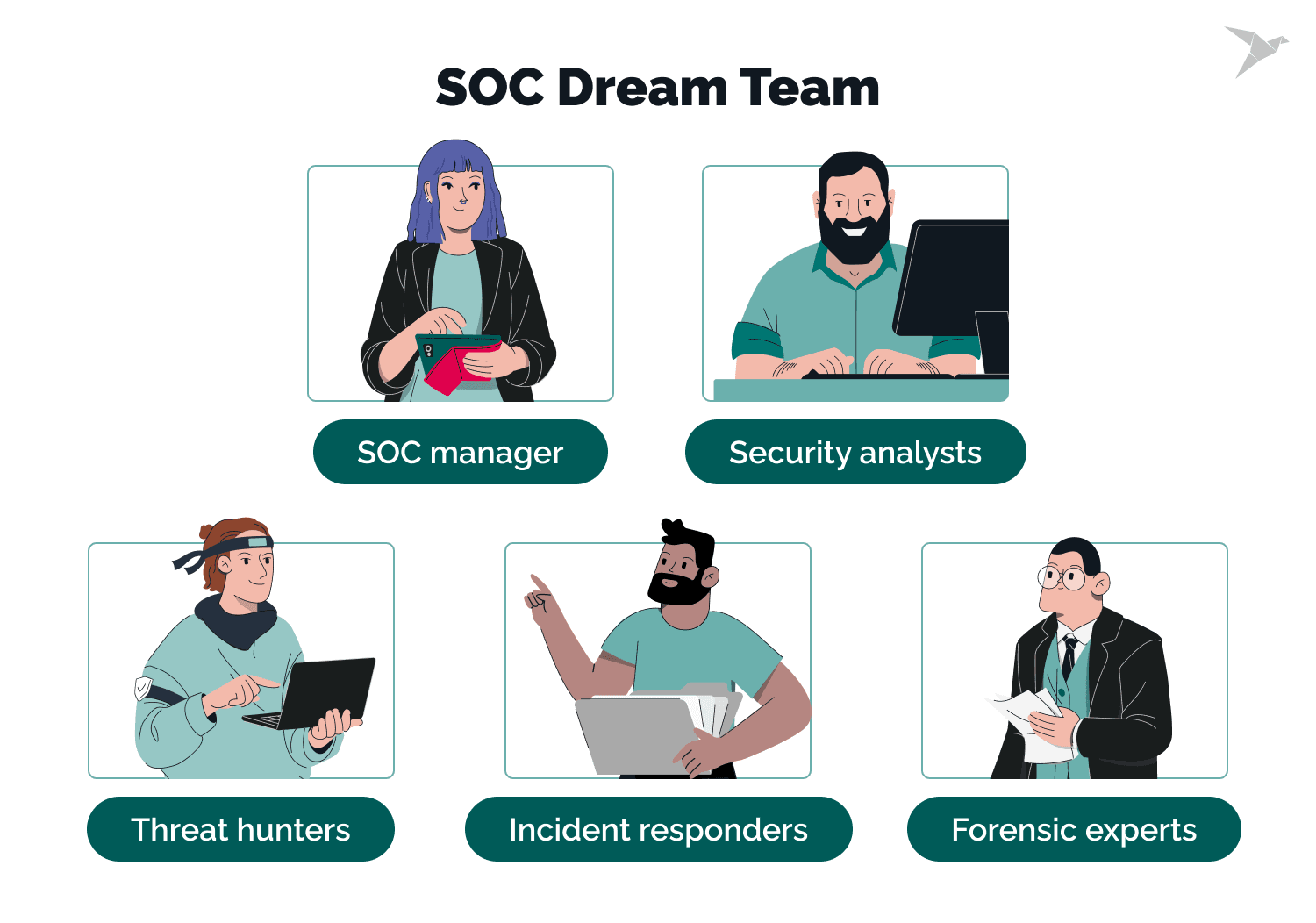
Your SOC is as strong and reliable as the people running it. You'll want a mix of security analysts, threat hunters, and incident responders. A well-rounded SOC team usually includes:
- SOC manager: oversees operations, strategy, and team coordination.
- Security analysts: monitor, detect, and respond to threats.
- Threat hunters: proactively search for potential threats.
- Incident responders: handle security incidents and recovery.
- Forensic experts: investigate and analyze security breaches.
Step 3. Choose your fighter: the right technology stack
You can't defend against what you can't see. So, give your SOC the core tools it needs: Security Information and Event Management (SIEM) systems, Endpoint Detection and Response (EDR), and threat intelligence platforms. And as AI-driven tools mature, they can cut down false positives and take over the repetitive work, which frees your analysts to focus on the most disturbing or urgent threats.
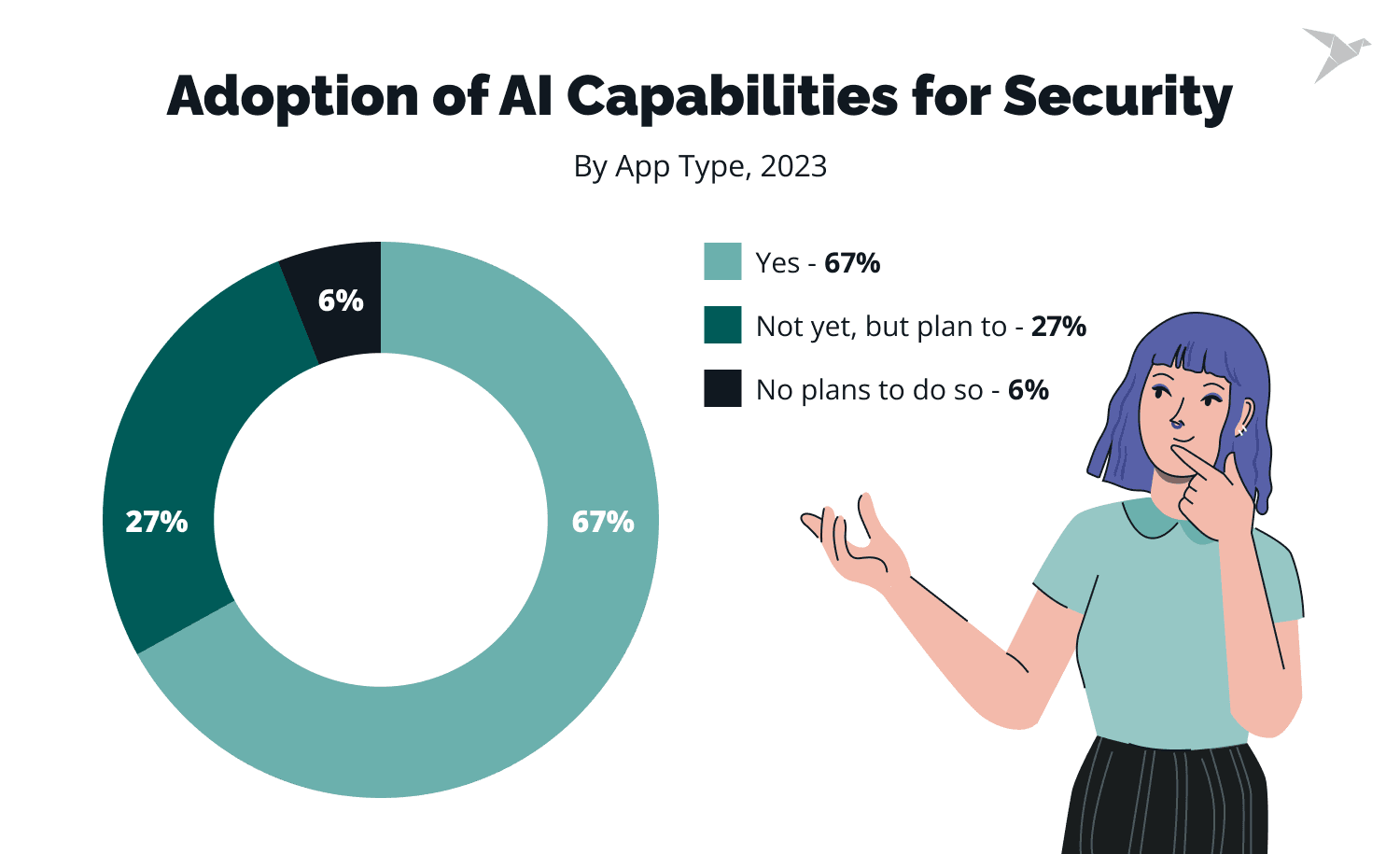
According to Statista, 67% of companies have already tested AI-driven security measures. Perhaps your company’s security strategy also can benefit from them.
Step 4. Set security monitoring and detection processes
Continuous monitoring holds a SOC together. Set up real-time threat detection with automated alerts, so that unusual activity gets flagged the moment it happens. And the sooner you catch a threat, the faster you can shut it down before it escalates.
Step 5. Develop an incident response plan
Every SOC needs a set of guidelines that fit your company and your industry. Your task here is to spell out clear roles, escalation procedures, response actions for different kinds of attacks, etc. From our experience, here a lot of teams cut corners, and it shows the day something goes wrong.
Coordinate with teams like AppSec, network operations, and legal counsel, so everyone responds together instead of tripping over each other. And test your incident response plan regularly with simulated cyberattacks, so your team is ready when a real one hits.
Step 6. Implement compliance and reporting mechanisms
Regulations like GDPR, HIPAA, and ISO 27001 require you to log security incidents and report breaches. Accordingly, your SOC needs reporting processes ready to go, which keeps you clear of penalties and legal trouble.
Step 7. Continuously improve and adapt
Cyber threats keep changing, and your SOC must change with them. Regular penetration testing and system upgrades keep your defenses current. And do not forget to encourage a culture of learning on the team, so your people stay ahead of the newest threats.
Step 8. Test and optimize your SOC operations
Truth be told, a good SOC is never finished. You’ll have to keep running regular assessments, digging into past incidents, and refining your response strategies. Red team exercises and attack simulations will help you find the weak spots.
At the same time, it is a good practiсe to track a few key metrics, like MTTD (mean time to detect), MTTR (mean time to respond), and your false-positive rate, so you can actually measure how well the SOC works. Then, you’ll be able to feed what you learn back into your defenses.
What are the Challenges in SOC Implementation and How to Overcome Them?
Building and running a SOC comes with its share of hurdles. However, with the right approach, most of them are manageable. Here are the biggest ones you'll run into and how to get past each.
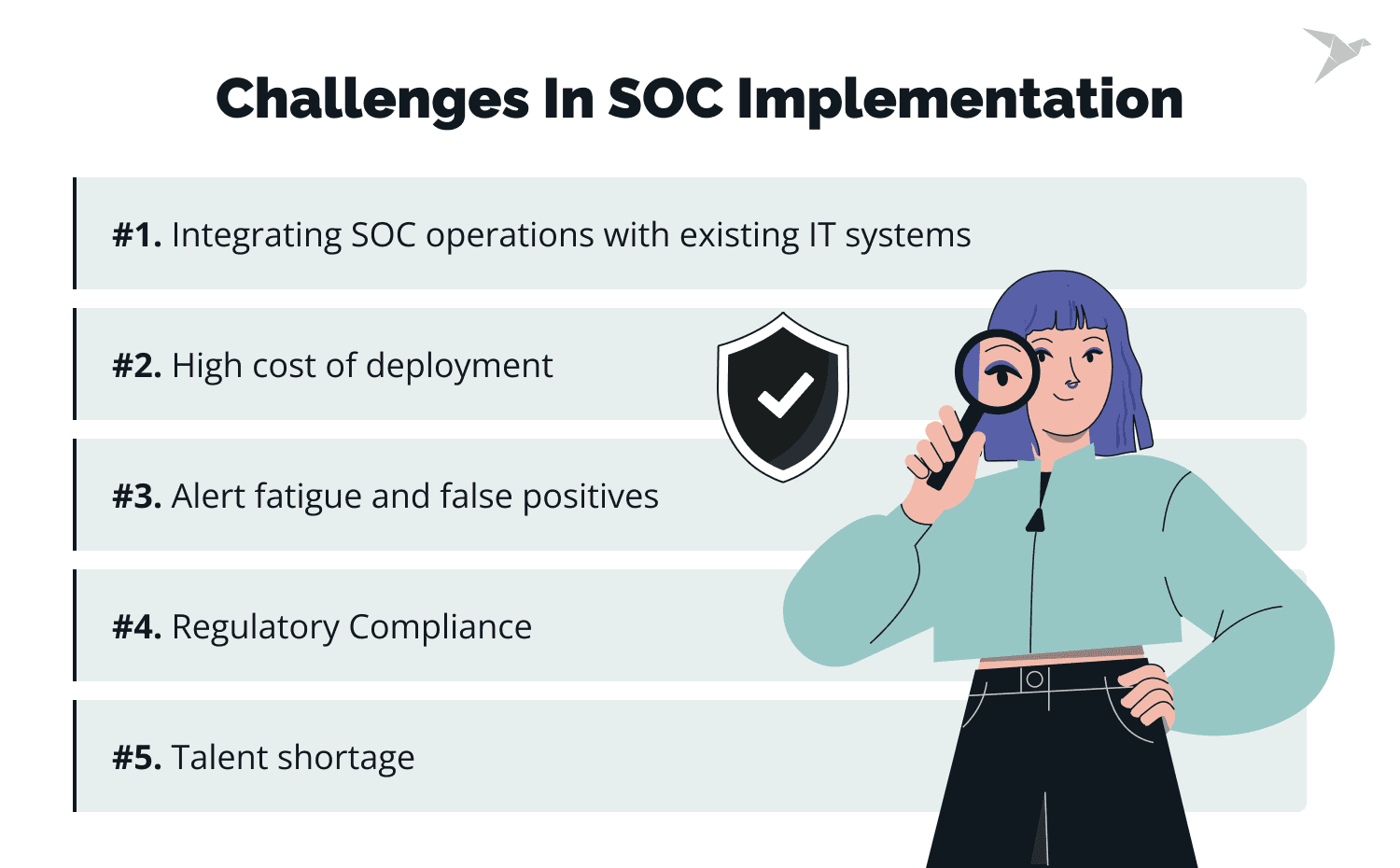
High cost of deployment
Setting up a SOC isn't a cheap adventure. You're paying for skilled professionals, strong cybersecurity tools, the infrastructure to run them, and so on. Those costs climb really fast.
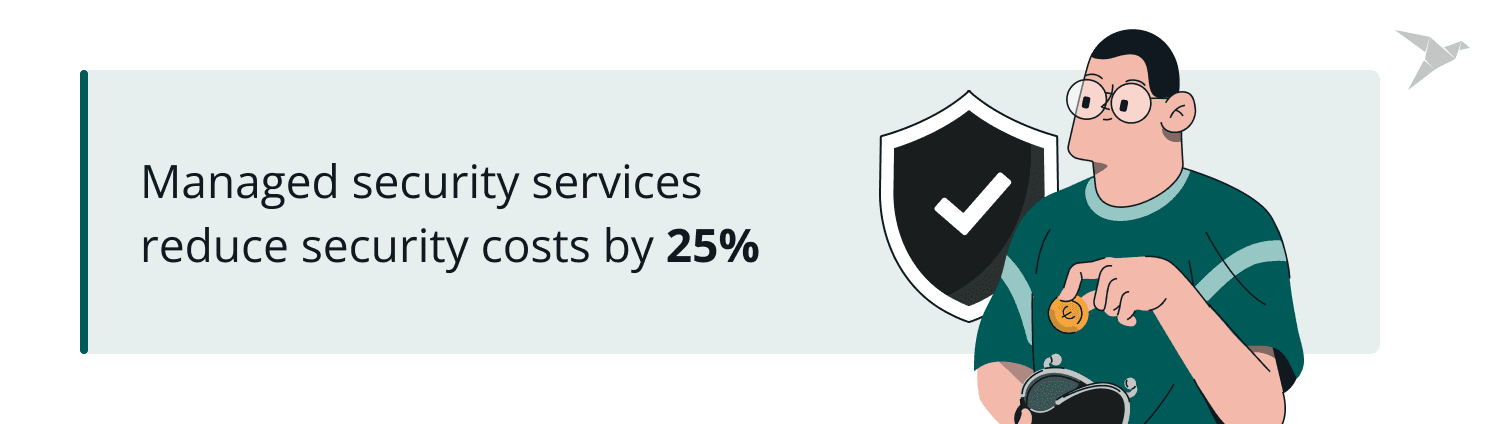
Solution: If a full in-house SOC is out of reach, it's worth considering a hybrid approach, where you can pair your internal security team with outsourced experts to cut costs without giving up protection. For instance, companies that invest in managed security services reduce security costs by 25% while strengthening their cybersecurity by 40%.
Alert fatigue and false positives
SOC teams deal with thousands of security alerts a day, and many of them are false positives. That constant flood wears people down, and real threats slip through.
Solution: From our experience, a few things can help here. Fine-tune your detection tools, add AI-driven filtering, run regular penetration testing, and make sure real threats get priority. It's also a good practice to review your security logs regularly and adjust the thresholds, so analysts can focus on precise goals and real threats.
Staying compliant with security regulations
Security laws like GDPR and HIPAA demand strict logging and reporting of incidents, and you can feel really overwhelmed to keep up with them.
Solution: Automation of your compliance tracking and reporting takes a lot of that weight off the team. Regular audits and clearly documented security policies also help you avoid fines and stay within industry standards. Cybersecurity compliance services cover all of these aspects.
Integrating SOC operations with existing IT systems
The process of adding a SOC to your existing IT infrastructure isn't always smooth. Your security tools, cloud platforms, and endpoint detection systems all need to work together.
**Solution:**To avoid integration headaches, you can start with a thorough assessment of your IT environment, and choose security solutions that support API-based integrations. A well-integrated SOC keeps communication flowing between your security layers. That reduces blind spots and improves response times.
Shortage of skilled cybersecurity professionals
There simply aren't enough cybersecurity experts to fill open roles. Globally, the shortage sits at nearly 3.5 million professionals, which makes hiring and keeping SOC analysts a real challenge.
Solution: From our experience, growing your own people often beats competing for scarce senior hires. You can close part of the gap in a few ways: invest in employee training, offer competitive salaries, and use AI-powered automation for the routine tasks. Or outsource it to an external cybersecurity partner.
CyberSecurity services for Elements.Cloud

How can TechMagic help?
If you're weighing whether to build a SOC in-house or bring in a partner, we can be a perfect match. We're CREST-accredited for security services and aligned with ISO 27001 and SOC 2. We've worked with 200+ clients across industries like HealthTech and FinTech. Our security team knows how to set up and run a SOC that actually holds up.
Proven expertise in cybersecurity
We've spent years helping companies tighten their security, from penetration testing to full SOC operations. For example, our CREST-certified team ran the security engagement for Corellium, and we've handled penetration tests for FinTech companies like Mamo. That hands-on work shapes how we build and run a SOC for you.
Certified and experienced security professionals
Our security experts hold recognized certifications, including Certified AI/ML Pentester from The SecOps Group. We also operate under CREST accreditation, with ISO 27001 and SOC 2 alignment. From our experience, though, certifications only matter when they're backed by real hours in the field. Our team has handled live threats first-hand, from threat detection through incident response, so your business stays a step ahead of attackers.
Results-driven approach
We keep the focus on one thing: protecting your business. You won't pay for tools you don't need or a bloated security stack. Our SOC work is built around efficiency, real cost control, and solid protection, without the overhead you'd carry building it all yourself.
Wrapping Up: SOC for Long-Term Security
Building a SOC is really about resilience, staying standing when cyber threats hit, and they will. A well-run SOC helps you catch, contain, and prevent security breaches before they do serious damage.
Maybe you're dealing with regulatory requirements, protecting sensitive customer data, or you just want a stronger security posture. Either way, your SOC is where that defense starts.
If you're planning to build one, start with the basics: a clear strategy, skilled people, and the right technology stack. Get those right, and you've laid the groundwork for strong security.
A SOC pays off in concrete ways. It lowers your risk, cuts downtime, and builds trust with your customers. And if setting up an in-house SOC feels like too much, a partner like TechMagic can help you put an efficient one in place, sized to what you actually need.

FAQ

To build a SOC, you start with a clear strategy: what are you protecting, and what does "secure" mean for your business? From there, you assemble a skilled team, set up your monitoring and response protocols, and put the right technology in place. A working SOC leans on three things: cybersecurity experts who detect and handle threats, clear workflows for security monitoring and compliance, and tools like SIEM and EDR to spot threats quickly.
A SOC rests on three pillars: people, processes, and technology. The people are skilled cybersecurity professionals who detect and respond to security threats. The processes are the workflows that guide threat monitoring, incident response, and compliance. The technology, including automation and real-time analytics, helps the team spot and shut down risks faster. Together, these three keep your defenses steady as threats change.
Security operations center building cost depends on a few factors: your infrastructure, your people, and your cybersecurity technology. An in-house SOC can run from $1 million to $5 million a year once you add up salaries, training, and tools. Outsourcing to a managed SOC is usually lighter on the budget, with prices that typically start around $5,000 to $50,000 a month, depending on how much security you need.