 Software Development
 Security Services
 Cloud Services
 AI Services
 Other Services















 TechMagic Academy


Native vs Hybrid App: Key Differences and What to Choose
Last updated:26 July 2026


Choosing between a native vs hybrid app approach can feel harder than it should. Both options have clear strengths, and the right choice depends less on trends and more on what your product actually needs.
The native vs hybrid app question used to have a clean answer. Native won on performance, hybrid won on budget, and you picked your side.
That's no longer how it goes. Cross-platform frameworks have closed most of the performance gap, and the teams shipping the best mobile apps increasingly use both approaches in the same product. So the useful question isn't which technology is better. It's which parts of your app justify platform-specific work, and which don't.
Here's how native apps vs hybrid apps compare in practice, what's changed in mobile app development, and how to decide.
Key Takeaways
- Native apps still lead to performance-intensive products needing deep device integration.
- Hybrid and cross-platform tools have matured. For most business apps, they're genuinely sufficient now.
- Your goals, budget, timeline and technical requirements decide this. Not a framework preference.
- Native gives you control. Hybrid gives your team velocity through a single codebase.
- There's no universal winner. The right answer is the one that fits the product you're actually building.
Hybrid vs Native Mobile Apps: A Quick Overview
One clarification first, because the terminology gets muddled and it changes what you're comparing.
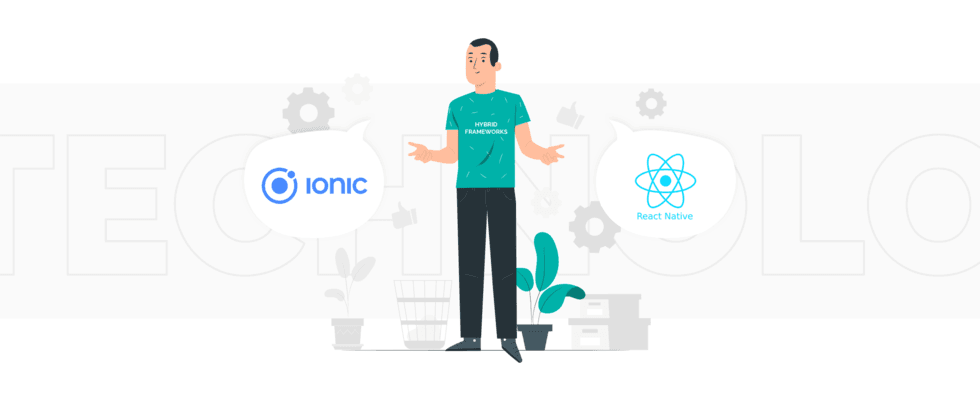
Hybrid apps in the strict sense are web apps wrapped in a native shell – HTML, CSS and JavaScript running inside an embedded browser. Ionic and Cordova work this way. Cross-platform apps like React Native and Flutter are different: they share one codebase but render through native UI components or their own engine, not a web browser. People say "hybrid app development" for both, and the performance conversation only makes sense once you separate them.
Native apps

Native app development targets one platform, using its official tools and platform specific programming languages. Swift for iOS apps, Kotlin for Android apps, each built for that specific operating system.
Native code talks directly to the operating system, so you get full access to device features, the smoothest interactions the hardware allows, and behaviour that matches what users expect from that particular operating system. The cost is duplication: two teams, two codebases, two release cycles.
Hybrid apps

Hybrid mobile apps run from one shared codebase deployed across multiple platforms. Modern frameworks reach most native device features through plugins and bridges, and for a large category of products the difference is no longer noticeable to users.
Where it shows is at the edges: heavy animation, intensive graphics, background processing, anything touching hardware features in unusual ways. Hybrid apps rely on the framework having already solved your problem. When it hasn't, you write a native module anyway.
Web apps
Web apps run in a web browser on mobile devices with no installation and no trip through the Apple App Store. Progressive web apps narrow the gap further, adding offline capabilities, push notifications on most platforms, and a home-screen icon that works without an internet connection once cached.
The trade-off is real access. Web app features stay inside what browsers permit, which rules out deeper hardware integration and usually assumes internet access. For desktop users and content-led products, that's often fine. For anything needing the device's capabilities, it isn't.
Examples of native and hybrid apps
Instagram is native-first. Media rendering that is smooth, with interactions that are responsive, needs direct device access.
Uber stays native for the same reason: real-time updates, GPS, and no tolerance for lag when someone's standing on a corner watching a car icon.
Spotify runs native for offline playback, uninterrupted streaming and push notifications. All of that requires deep integration with the operating system.
On the other side, Shopify committed to React Native across mobile in 2020 and has been building that way since. Google Pay was rebuilt in Flutter.
It's worth knowing the counter-example too. Airbnb ran React Native at scale and then published a detailed account of sunsetting it in 2018, returning to native development. Much of what they hit has since been addressed by the frameworks. But their write-up remains the most honest public account of where cross-platform gets expensive, and it's worth reading before you commit.
Differences Between Native and Hybrid
User experience and performance
Native apps benefit from running as the platform intends. Animations hold their frame rate, gestures feel right, and the user interface follows conventions users already know without being taught.
Hybrid apps have got much closer. Cross platform apps built with React Native or Flutter now match native apps closely enough for most business applications, and users won't spot the difference in a form, a list or a checkout flow. The gap reappears in graphics-heavy work and complex real-time interactions, the places where a dropped frame is visible.
Access to device features
Native development gives you direct access to device features the moment the platform ships them. New camera API, new sensor, new OS capability: it's available to you immediately.
Hybrid frameworks reach the same hardware features through plugins, which means someone has to build and maintain that bridge. For camera, GPS, storage and notifications the plugins are mature, and plenty of hybrid apps never hit a wall at all. For anything newer or more unusual, you may face limited access, a wait, or writing the native module yourself.
Development speed and cost
This is where hybrid development makes its strongest case. One team, one codebase, two platforms. Development costs drop substantially, and so do the maintenance costs behind them, the development process gets simpler to run, and features ship to both stores at once.
Native means separate work per platform. Roughly speaking that's two builds, two sets of bugs, and two release processes. The investment buys control, and whether that's worth it depends entirely on your product.
Design consistency across platforms
These pull in opposite directions, and it's a genuine design decision rather than a technical one.
Native and web apps both follow their environment's conventions naturally. An iOS app feels like iOS; an Android app feels like Android. Cross platform development tends toward one unified experience everywhere, which strengthens brand consistency and can feel slightly foreign on both platforms.
Neither is wrong. Consumer apps usually benefit from matching platform expectations. Internal and B2B tools usually benefit from everyone seeing the same thing.
Offline use and maintenance
Native apps handle offline functionality cleanly through local storage and background processing. Hybrid apps support it too, though how well depends on the framework and how much you've asked of it.
On maintenance, hybrid wins clearly. A single codebase means one fix rather than two, and one dependency upgrade rather than two. Over a multi-year product life that compounds more than most teams expect at the outset.
Which option makes sense in 2026
Go native when performance is the product, when you need deep hardware integration, or when a highly polished platform-specific experience is what you're selling.
Go hybrid or cross-platform when speed to market matters, when budget is finite, and when sharing code across multiple operating systems saves you more than platform polish would earn.
Most teams we work with land between the two: cross-platform for the bulk of the app, native modules for the two or three screens that genuinely need them.
Technologies Used for Mobile Application Development
Native development
Swift for iOS, Kotlin for Android. Each native development language comes with mature tooling, first-party documentation, and same-day access to whatever the platform ships next. Choose this when you develop apps that are performance-critical, or when you need capabilities cross platform app development hasn't reached yet.
React Native
The most widely used cross platform framework going. You write once, and it renders through genuine native UI components rather than a web view, which is why performance holds up for the vast majority of business apps.
The ecosystem is the real argument. Nearly any integration you need already exists, and when it doesn't, dropping into native code is a normal part of the workflow rather than an escape hatch.
Flutter
Google's cross-platform framework, using Dart and its own rendering engine. Because Flutter draws every pixel itself, you get pixel-identical results across different platforms and near-native performance.
That same design is the trade-off. Your app looks exactly as designed everywhere, which is excellent for brand consistency and slightly less native on each individual platform.
Ionic
The genuine hybrid option, in the strict sense. Web technologies running inside an embedded browser, or shipped as a progressive web app. HTML, CSS and JavaScript, essentially.
Fast to build, especially if your team already does web development. Hybrid and web apps share most of the same skill set, which is a real staffing advantage. Performance and device access are more limited than the alternatives, which makes it a sensible fit for simpler products, prototypes and internal tools rather than a flagship consumer app.
What matters in 2026
The honest summary:
- Native applications for the highest performance and deepest device integration
- React Native or Flutter when you want fast delivery without giving up much performance
- Ionic for simpler apps, prototypes, and internal tools
Hybrid apps offer speed and code reuse. Native development offers control over advanced features and refined platform behaviour. Most products need some of each.
Conclusion
The native vs hybrid app debate is much less binary than it was five years ago.
Native still leads on performance and device integration, and for fintech, gaming and real-time products that lead still decides the outcome. But modern cross-platform tools handle most business requirements competently, and React Native and Flutter now account for a growing share of mobile projects, particularly among startups and enterprises that need to build apps faster and cheaper across different platforms.
The performance gap keeps narrowing as rendering engines and tooling improve. Which is why the interesting answer isn't native or hybrid at all. It's the combination: cross-platform frameworks for standard features, native modules where the product genuinely demands them. This hybrid approach is becoming the default among mobile development teams, and for good reason.
If you're weighing this up for a specific product, the questions worth answering are what your target audience expects, which key features touch the hardware, and how much platform polish your market actually rewards. We're happy to work through it with you.

FAQ

Native apps target one platform using its own tools and languages, so they access native features directly. Hybrid apps share a single codebase across platforms, reaching device features through the framework. Native delivers better performance and integration; hybrid delivers faster development and easier maintenance.
When you need high performance, complex interactions, real-time capability, or substantial access device features like camera, GPS and background processing. Also when platform-specific polish is part of what you're selling, which is common in consumer products competing on feel.
Hybrid usually costs less, because a single codebase cuts both build time and ongoing development and maintenance costs. Native asks for more investment up front and returns more performance headroom and flexibility. For most business apps, hybrid is the more efficient choice. For performance-critical products, native pays for itself in ways a spreadsheet won't show you until launch.