
 Software Development
 Security Services
 Cloud Services
 AI Services
 Other Services














 TechMagic Academy




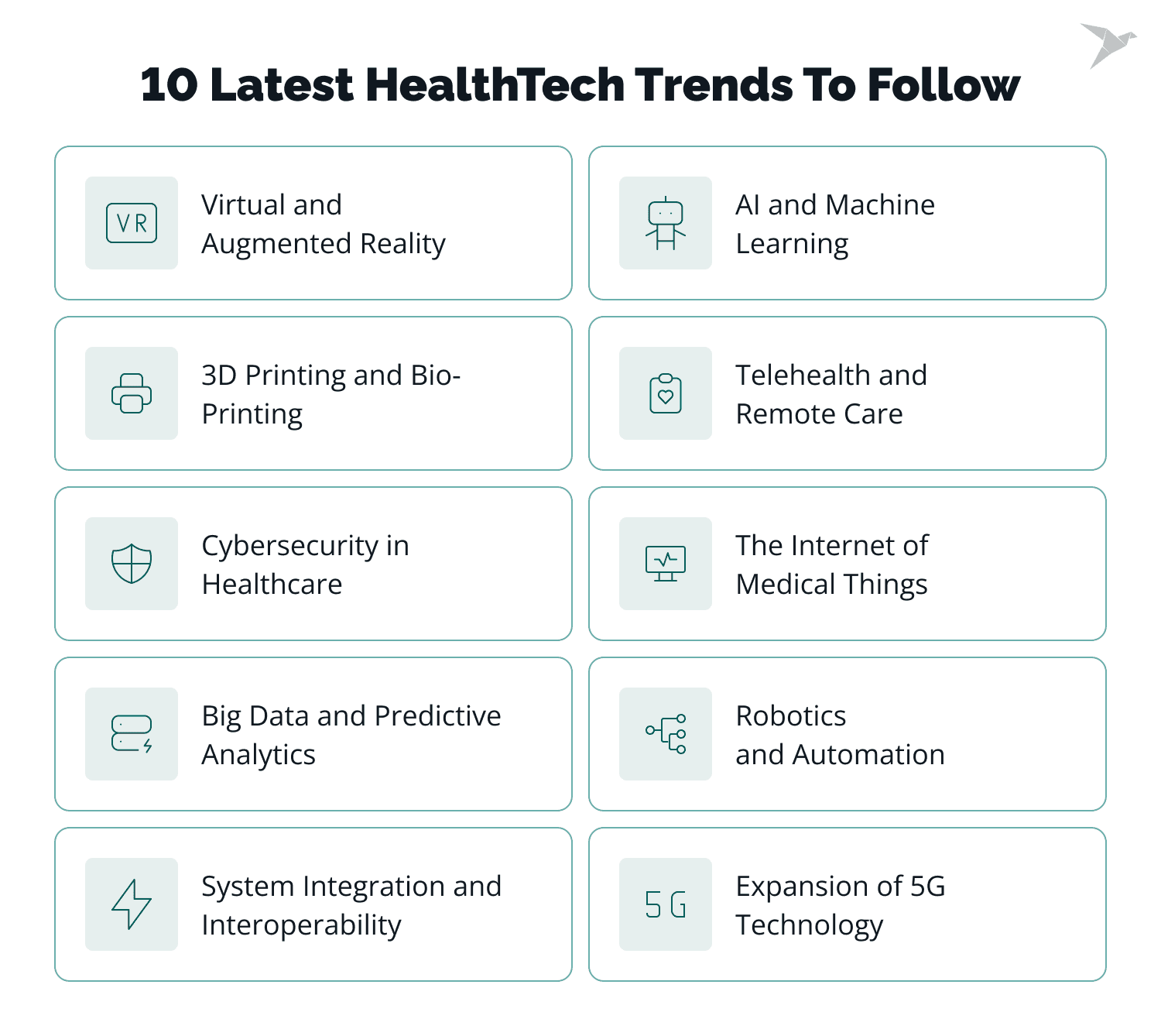
Every year brings a list of healthcare technologies that will change everything. Most of them do change something, eventually, and usually later than the forecast said.
This is a list of ten that are already running somewhere real: AI reading eye scans, patients monitored at home through a smartwatch, surgeons rehearsing in VR before they operate, prosthetic arms printed for under $100. Each one below comes with a named example, a market figure, and an honest note on where it tends to stall.
These are the top healthcare technology trends we see landing in real projects, so what follows is a builder's read rather than an analyst's.
Key Takeaways
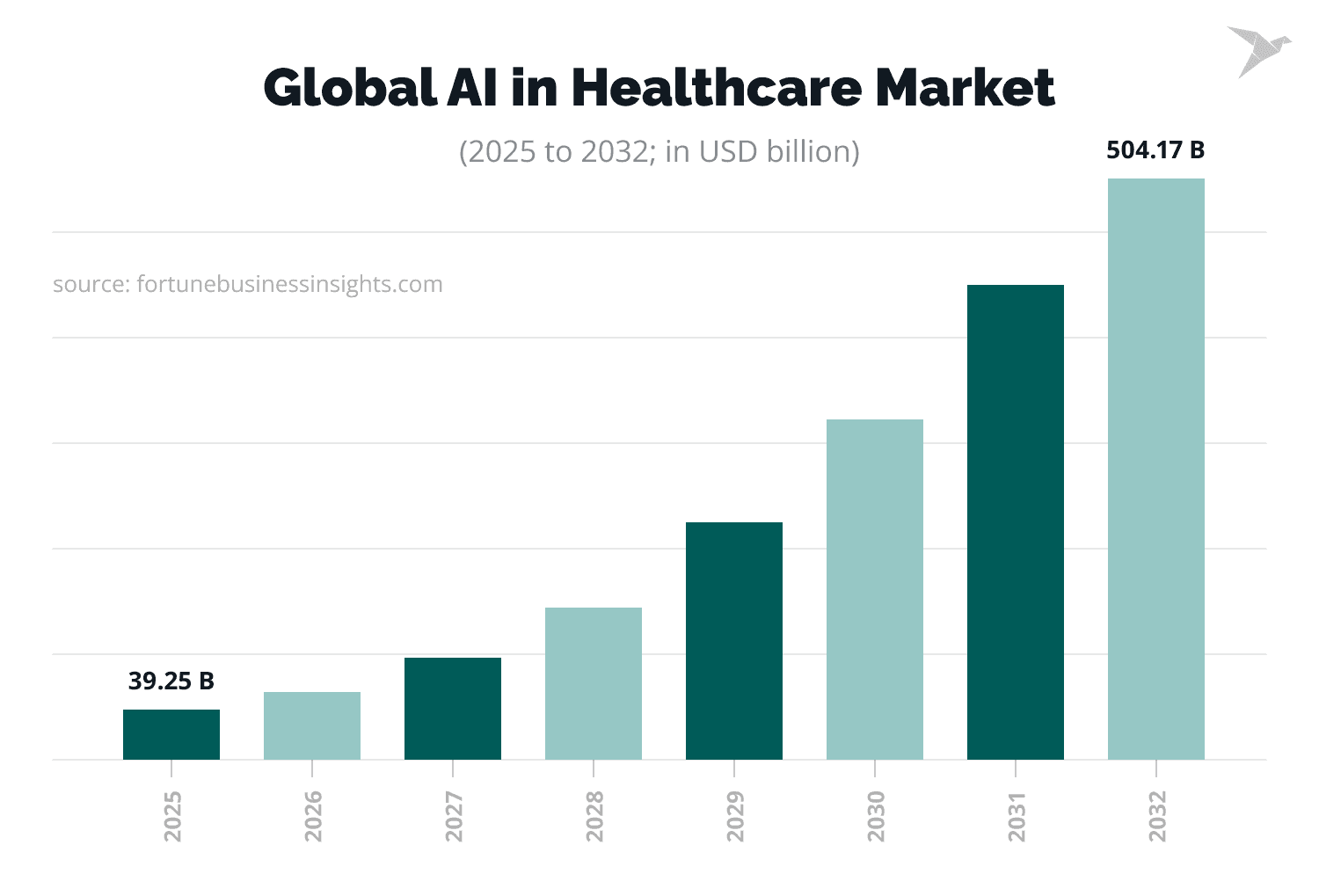
- AI runs through more of this list than any other technology: diagnostics, drug discovery, patient support, and security all lean on it. The market is projected at $504.17 billion by 2032.
- The evidence is strongest where a named study exists. Sepsis flagged 48 hours early, irregular heartbeats caught at 97% accuracy, pain perception down 40% with VR.
- 3D printing already wins on cost. The University of Michigan printed a prosthetic arm for under $100, against roughly $5,000 for the traditional equivalent.
- Printed transplantable organs are still years away. Vasculature is the bottleneck, whatever the market forecasts imply.
- Telehealth has settled into infrastructure, with 62% of Americans now using it.
- Interoperability and security decide whether any of the rest reaches a patient. Gartner puts 2026 interoperability spend at $14 billion.
How We Apply These Trends in Real Projects
At TechMagic, we have built HealthTech software since 2014: custom EHR and EMR platforms, telemedicine systems, AI features, and the integrations that connect them. That gives us a builder's view of the healthcare tech trends below.
A pattern repeats across almost every one. What slows these projects down is messy clinical data, interoperability between systems that were never meant to talk, and security that has to survive a real HIPAA audit. AI diagnostics, remote monitoring, and 5G-connected devices all meet the same wall once they leave the demo.
That is where our work happens. We focus on the trends we can ship today: applied AI, telehealth, IoMT data integration, FHIR and HL7 interoperability, and the cybersecurity underneath them. Our security team holds CREST accreditation and a Certified AI/ML Pentester credential, which counts when a system touches patient data. As you read the trends below, the useful question is what it would take to ship each one.
1. AI and Machine Learning Transform Healthcare
Artificial Intelligence (AI) and Machine Learning (ML) top every list of health technology trends for a reason: they now touch diagnostics, drug development, patient support, and the back office at the same time. The global AI in healthcare market is projected to grow from $39.25 billion in 2025 to $504.17 billion by 2032, exhibiting a CAGR of 44.0% during the forecast period, Fortune Business Insights reported.
The money behind that is concentrated. In 2024, U.S. private AI investment reached $109.1 billion, nearly 12 times higher than China's $9.3 billion and 24 times the U.K.'s $4.5 billion, according to The 2025 AI Index Report.
Four applications are far enough along to judge.
AI in diagnostics: accuracy and speed
Radiology and pathology were the first specialties to feel this. Models trained on large image sets pick out patterns in scans and clinical data, which moves detection earlier and narrows the diagnosis.
Google's DeepMind Health is the most tested example. On eye scans it identifies diabetic retinopathy and macular edema at accuracy that matches expert clinicians.
Cardiology followed. Algorithms reading ECG data flag arrhythmias and other heart conditions early enough to act on them.
Predictive analytics for patient outcomes
The same models can look forward. Fed vital signs, lab results, and clinical history, they estimate which patients are deteriorating before the bedside picture makes it obvious.
Sepsis is the clearest case. A Nature Medicine study showed predictive models flagging critical events up to 48 hours ahead, which is the difference between a planned intervention and a crash call.
Chronic disease management uses this differently. Here the value is catching a flare-up early and adjusting treatment before it escalates, which matters most for patients living with diabetes, asthma, and hypertension.
AI-powered virtual health assistants for patient support
Patients reach for these assistants when the clinic is closed. Through an app, they get health advice 24/7, medication reminders, and follow-up care after a visit.
Ada Health's assistant is one example: users describe their symptoms and get guidance based on what they entered. Others have taken over the administrative side, mostly appointment scheduling. In mental health, chatbots now deliver structured therapy, including cognitive behavioral therapy (CBT).
Machine learning in drug development and personalized medicine
Drug discovery has always been slow and expensive. Machine learning is compressing parts of it. Models trained on large compound datasets rank which candidates are worth taking into the lab, so chemists work from a shortlist instead of the full library.
Molecular structure is where this pays off soonest. A model can predict how a compound will behave against a specific disease before anyone synthesizes it, which shortens the pre-clinical testing cycle.
The same shift is reaching AI in clinical data management. Collecting and validating patient records across systems used to depend on manual reconciliation. Fix that and data integrity improves with it, and the research resting on those records moves faster.
Oncology shows what personalized medicine looks like in practice. Models read a patient's genetic data alongside the tumor's characteristics, then rank which cancer treatments are likely to work for that specific person. Oncologists use this today.

2. Virtual and Augmented Reality for Healthcare Training and Treatment
Surgical training used to mean watching a procedure, then doing it on a real patient. VR breaks that sequence, and AR is changing what a surgeon sees mid-operation. The virtual reality healthcare industry market is expected to grow from $4.19 billion in 2024 to $28.59 billion in 2029, at a CAGR of 47.9%, according to the Business Research Company. Training, surgical precision, and pain management are where VR and AR have real traction in healthcare IT. Each works differently, so take them one at a time.
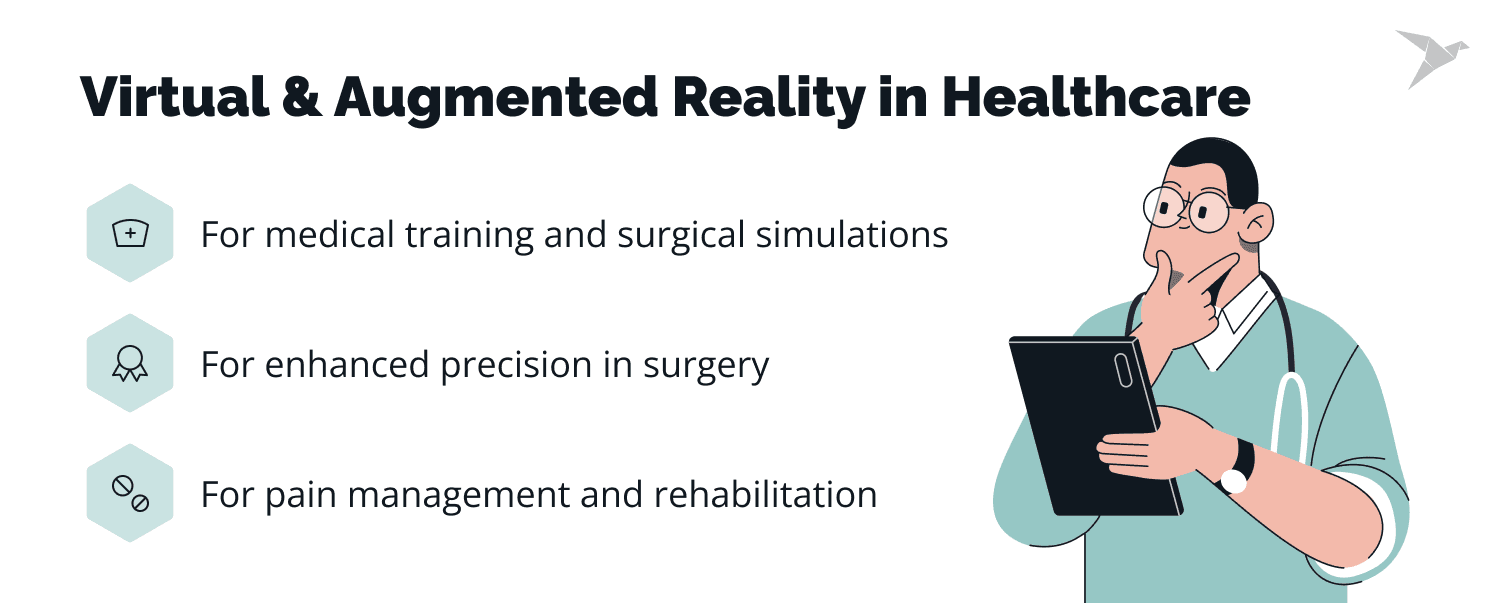
Virtual reality in medical training and surgical simulations
A resident can now rehearse a procedure a dozen times before touching a patient. Medical schools picked this up quickly, using VR for surgical practice, diagnostic reasoning, and the judgment calls that are hard to teach from a textbook.
Osso VR runs one of these platforms, where surgeons work through procedures in simulation.
VR training holds up on both performance and retention. One JAMA Surgery study found surgeons who trained on VR systems made 230% fewer errors in real operations than surgeons trained the traditional way.
Augmented reality in surgery for greater precision
AR puts the scan on top of the patient. A surgeon looking at the operating field also sees where blood vessels, nerves, and tumors sit, in real time, without turning to a monitor.
Microsoft HoloLens has been used in the operating room this way, giving surgeons an augmented view of the patient's anatomy. The payoff is largest in brain and spinal surgery, where small margins decide the result. Incisions land closer to plan, complications drop, and patients recover faster.
VR for pain management and rehabilitation
Chronic pain is where VR moved from training into treatment. For someone living with it, a headset works as distraction. Attention goes to the virtual environment and away from the pain, and anxiety usually drops with it.
Brigham and Women's Hospital in Boston uses VR during burn wound care, one of the more painful procedures in hospital medicine. Patients spend the dressing change inside a calm virtual environment. One Frontiers in Psychology study measured a 40% drop in pain perception.
Rehabilitation applies the same idea differently. Patients recovering from surgery or injury work through interactive exercises in VR that get them moving and rebuild muscle.
Learn about our expertise in the industry and what we have to offer
3. 3D Printing and Bio-Printing in Healthcare
3D printing gives clinicians something no catalogue can: a part shaped for one specific body. In healthcare that covers prosthetics, implants, and, further out, printed human tissue. Fit, cost, and turnaround all improve.
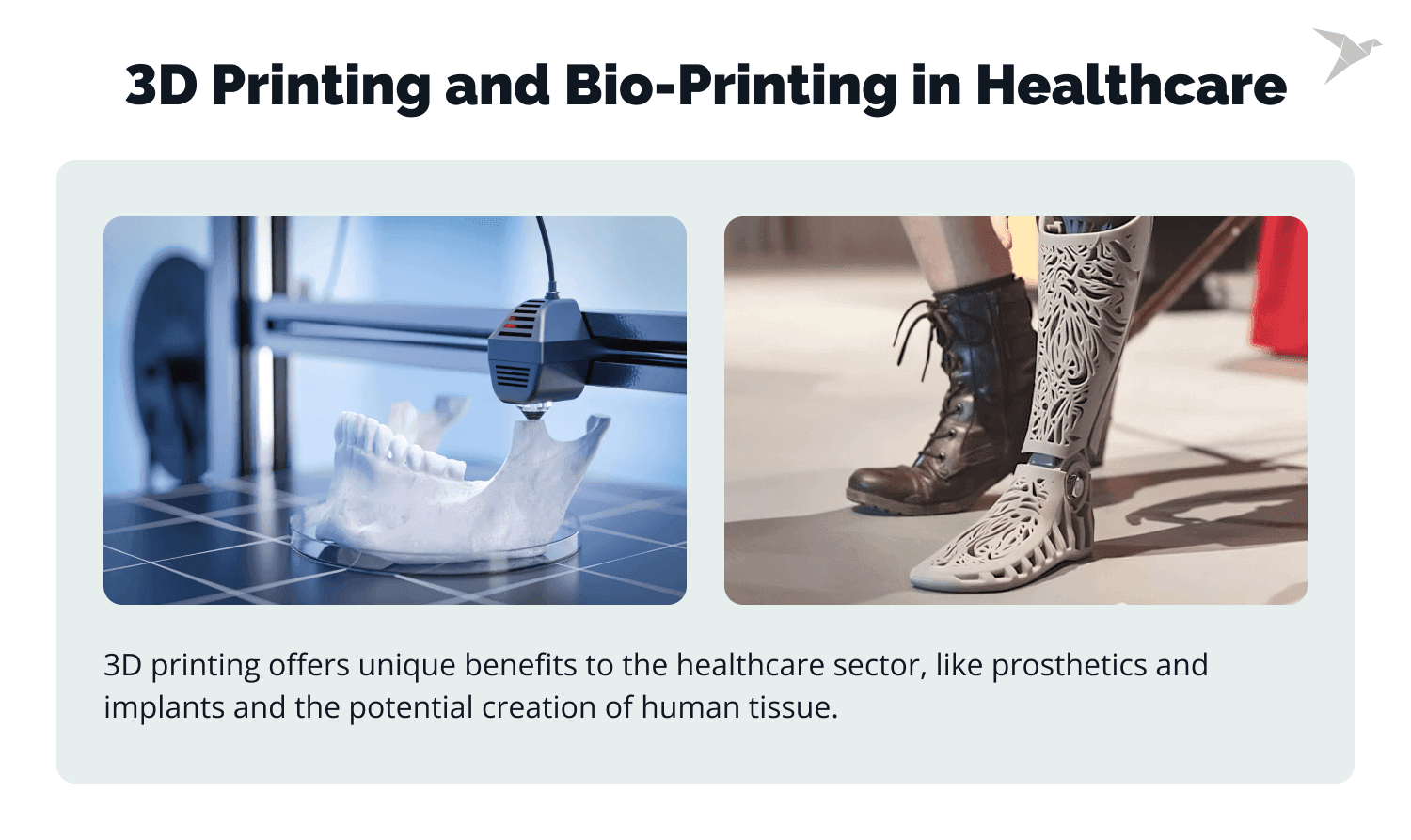
The global 3D bioprinting market is estimated to reach over $9.42 billion by 2032, growing at a CAGR of 17.2%, according to the Consegic Business Intelligence.
Custom prosthetics and implants through 3D printing
Off-the-shelf prosthetics are built to an average body. Few patients match it, and printing changes the economics of a custom fit.
The University of Michigan built a 3D-printed prosthetic arm for under $100. The traditional equivalent runs about $5,000. That is a fifty-fold difference rather than a marginal saving, and it is what puts prosthetics within reach in low-income regions.
Dental prostheses and hip replacements are going the same way. A printed implant matched to the patient's anatomy seats better, which means fewer complications and a device that stays comfortable over years of use.
Bio-printing: Creating functional human tissue
Bio-printing uses living cells as the material. Skin, cartilage, and blood vessels have all been printed in a lab, and Organovo has produced human liver tissue that works for drug testing and research.
Printing a whole transplantable organ is a different problem, and it is still years out. Vasculature is the sticking point: tissue thicker than a few cell layers needs a blood supply built into it. Worth being clear about that, because the "no more transplant waiting lists" framing runs ahead of the science.
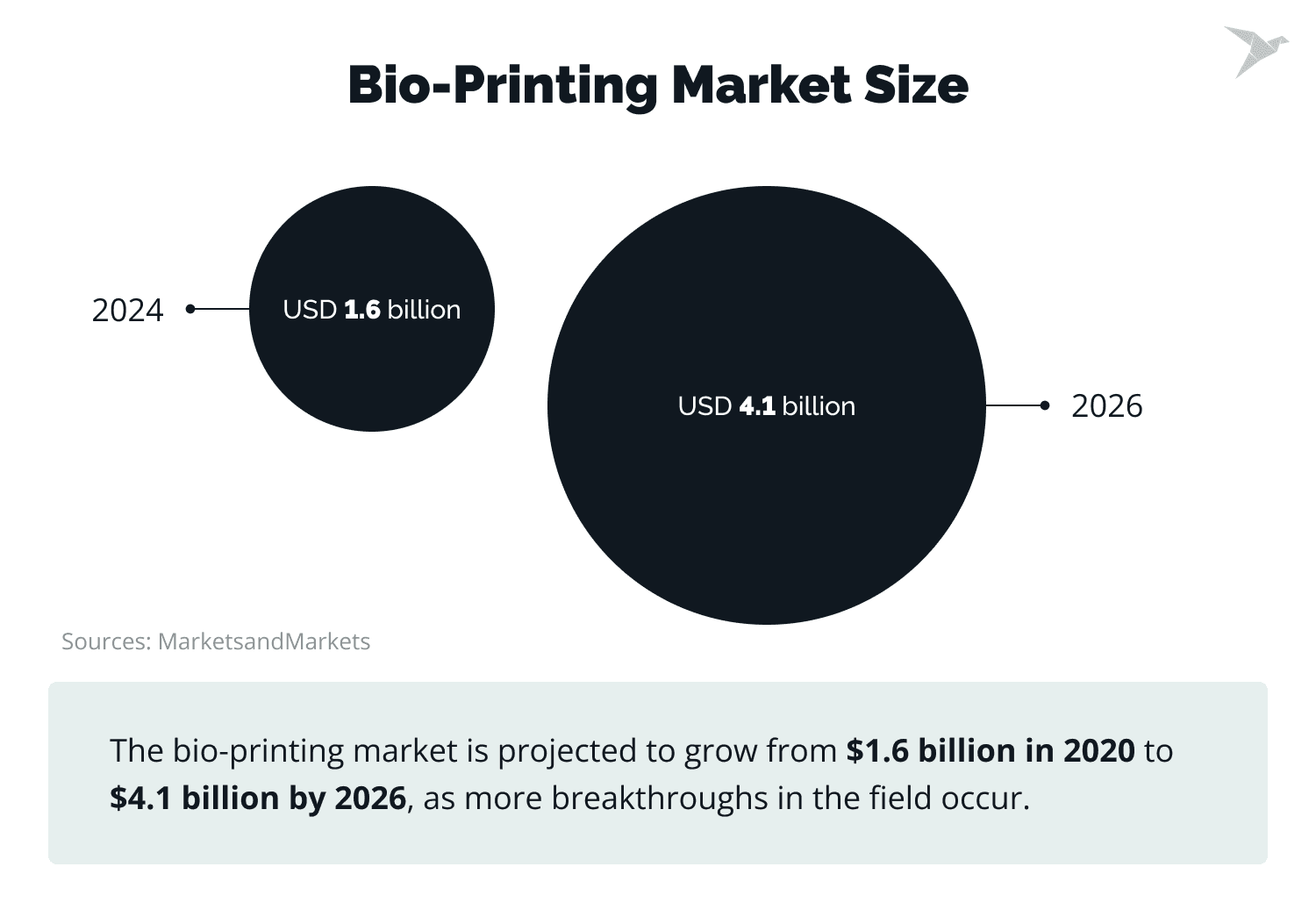
According to MarketsandMarkets, the bio-printing market is projected to grow from $1.6 billion in 2020 to $4.1 billion in 2026. The nearer-term payoff is drug testing on printed human tissue, which reduces reliance on animal models and gives results closer to human biology than a mouse can.
4. Advancements in Telehealth and Remote Care
Among the healthcare and technology trends on this list, telehealth is the one that already stopped being an emergency measure and became infrastructure. 62% of Americans now use telehealth services, and 77% see it as the future of healthcare, Harmony Hit reported.
For patients, it removes the trip. Hospitals get some pressure off the building. And for someone managing a chronic condition from a rural address, remote care can turn quarterly check-ins into monthly ones. That demand is why telehealth software development services now have to satisfy clinical workflow and compliance requirements at the same time.
Virtual consultations: Streamlining healthcare access
A video consultation replaces a waiting room, which is why uptake held after the COVID-19 emergency ended rather than falling back.
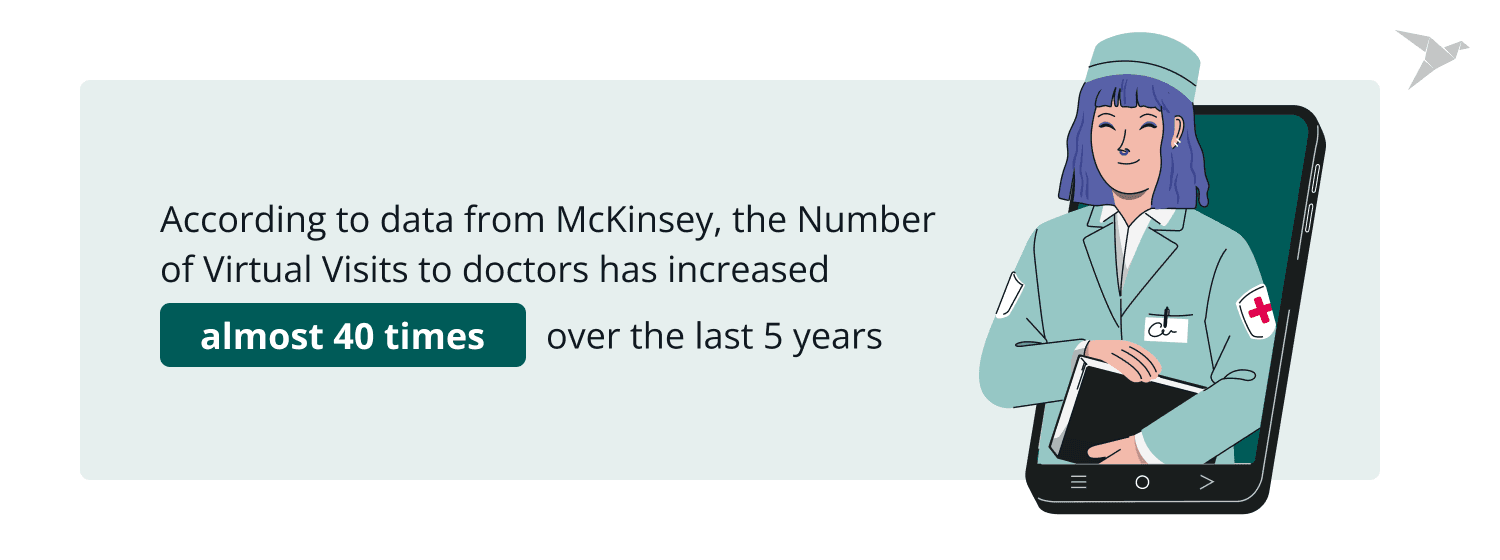
McKinsey found virtual care accounted for 38% of U.S. healthcare visits in 2021. For patients with mobility limits or a two-hour drive to the nearest specialist, that is access they did not previously have.
Clinicians feel it too. Consultation slots are shorter and easier to schedule, so a doctor can see more patients in a day without the day getting longer.
Remote patient monitoring with wearables
A smartwatch collects heart rate, oxygen levels, and sleep data continuously, which gives a clinician something no periodic appointment can: a baseline. The Internet of Medical Things (IoMT) is widening what that hardware can report.
The Apple Watch detects atrial fibrillation (AFib), a condition that often shows up between appointments and disappears before anyone measures it. That is the real argument for continuous monitoring.
For diabetes and hypertension, the value is catching the drift early. A trend line over six weeks tells a clinician more than a single reading taken in a corridor, and it gives them a reason to call the patient before something breaks.
Telepsychiatry: Addressing mental health challenges
Telepsychiatry is growing faster than most telehealth segments, helped by rising mental health awareness, according to the World Health Organization. Part of the appeal is privacy: booking a video session is easier than walking into a clinic where someone might recognize you.
The Lancet Psychiatry found patients in remote therapy had outcomes comparable to face-to-face treatment, across conditions including depression and anxiety. That combination of comparable outcomes and lower cost is why the segment scaled.
Telemedicine and the future of rural healthcare access
Rural healthcare has a distance problem before it has a technology problem. A patient three hours from the nearest cardiologist either makes the trip or skips the appointment.
The American Journal of Managed Care reports telemedicine has narrowed that gap, with better specialist access, fewer hospital readmissions, and higher patient satisfaction.
5. Cybersecurity in Healthcare: Protecting Patient Data
In March 2025, 86% of the 44 reported healthcare data breaches came from hacking. Deliberate attacks, in other words, rather than lost laptops.
Every trend in this article puts patient data into another system, and each one widens the attack surface. Security earns its place among healthcare software trends for that reason alone, which is why it sits alongside the technology here rather than after it.
Advanced encryption technologies for healthcare data protection
Two states matter, and organizations regularly cover one and forget the other: data in transit and data at rest. As more workloads move to cloud computing and electronic health records (EHR), both need encrypting.
According to HealthITSecurity, 90% of healthcare organizations now use some form of encryption. "Some form" is the operative phrase. End-to-end encryption, where only authorized parties can read the data, is a narrower group than that number suggests.
AI in detecting and preventing cyber threats in healthcare
Anomaly detection is where AI earns its place in a security stack. A model watching network traffic notices the pattern that a human analyst would find on Tuesday, and it notices it on Sunday night.
McKinsey estimates AI-driven cybersecurity could cut healthcare security costs by up to 30%. It also takes some of the evidence-gathering work out of HIPAA compliance, which absorbs more security budget than most teams expect.
Compliance with healthcare regulations (HIPAA, GDPR)
HIPAA (Health Insurance Portability and Accountability Act) and GDPR (General Data Protection Regulation) set the rules for storing, sharing, and protecting patient data. Fines are the visible cost of getting this wrong. The reputational damage lasts longer and is harder to price.
Much of the compliance workload is monitoring and evidence collection, which is repetitive and was done by hand until recently. AI and machine learning now handle a good share of it.
Blockchain for securing healthcare transactions
Blockchain shows up in healthcare mostly around supply chain provenance and audit trails, where a tamper-evident ledger genuinely helps. Drug pedigree tracking is the clearest use.
One caution, because it gets muddled often: an immutable ledger stops records being altered without leaving a trace. It does not control who can read them. Access control is a separate problem, and blockchain does not solve it.
6. IoMT Revolutionizes Patient Care
The Internet of Medical Things (IoMT) is the network of connected medical devices reporting patient data in real time. Pumps, monitors, sensors, wearables, all talking to something.
The global IoMT market is projected to grow from $79.64 billion in 2024 to $242.72 billion in 2029, at a CAGR of 25.8%, according to the Business Research Company.
Wearable devices for continuous health monitoring
Section 4 covered wearables from the telehealth side. The IoMT angle is the data pipeline behind them.
Stanford Medicine tested the Apple Watch's heart rate monitoring and ECG features and found they detected irregular heartbeats with over 97% accuracy. That is a consumer device producing clinically useful signal, which is new.
Diabetes, hypertension, and sleep apnea all benefit from the same thing: measurement that continues once the patient goes home. The clinical value shows up when someone acts on an alert quickly.
Smart medical devices for real-time data collection
Connected thermometers, glucose meters, blood pressure cuffs, and pulse oximeters now send readings straight into the record instead of onto a clipboard.
Abbott's FreeStyle Libre is the one most patients have heard of. A small sensor on the skin tracks glucose through the day and pushes it to a mobile app, where the care team can see the curve and adjust treatment against it. A single fasting reading at a quarterly appointment cannot tell them that.
Early warning is the second benefit. Remote monitoring also cuts the number of appointments that exist only to take a measurement.
IoMT in hospital management: Improving operational efficiency
Hospitals are using IoMT away from the bedside too, for inventory, equipment status, and workflow. Less visible than a wearable, and often a faster return.
Connected infusion pumps are the sharpest example. The pump adjusts drug delivery against patient-specific data, which removes a category of dosing error that used to depend on a tired nurse reading a chart correctly at 3am. Equipment monitoring works on the same principle, flagging a device heading for failure before it fails mid-procedure.
Frost & Sullivan expects the global IoMT market to reach $176 billion in 2026.
Every device added here is another endpoint on a clinical network, which is why demand for cybersecurity services for healthcare organizations keeps climbing.
7. Big Data and Predictive Analytics Drive Healthcare Innovation
Predictive analytics came up in section 1. This section is about the data layer underneath it, and what it takes to make that data usable.
The global big data in the healthcare industry market is anticipated to reach $283.43 billion by 2032, growing at a CAGR of 16.78% from 2024 to 2032, according to SNS Insider. The healthcare analytics market was valued at $33.80 billion in 2022 and is forecast to reach $152.32 billion by 2030, a CAGR of 20.70%.
Data-driven decision-making for healthcare providers
Mount Sinai Health System in New York built readmission prediction into its workflow. The model reads patient records alongside social determinants of health, then flags who is likely to be readmitted so a care manager can intervene first.
The pattern generalizes: a specific prediction, a specific person who acts on it, a specific cost avoided. Analytics that stop at a dashboard nobody owns do not produce that.
Coordination improves as a side effect. When a clinician can see the full history rather than their own department's slice of it, fewer decisions get made on partial information.
Big data for disease prevention and personalized care
Prevention is the other half of this. Analyzing genetic data alongside lifestyle and environmental factors gives a probability that a specific patient develops a specific condition, which is a better basis for a prevention plan than population averages.
Foundation Medicine does this in oncology. They sequence a patient's tumor DNA and recommend targeted therapies matched to the genetics of both patient and cancer.
The practical gain is fewer rounds of trial and error. Standard practice has often meant trying the first-line treatment, waiting, and trying the next one.
Real-time data analytics for faster response in emergency healthcare
In an emergency department the data has to arrive faster than the decision. Geisinger Health System wired real-time analytics into its emergency protocols, so physicians see vitals, lab results, and imaging as they land rather than waiting for a report.
Heart attacks, strokes and major trauma are where this pays. The treatment window is measured in minutes, and a delay in seeing a lab value is a delay in treating.
8. Robotics and Automation in Healthcare
Robotics is one of the few technology trends in healthcare that splits cleanly by setting: the operating theatre, the hospital corridor, and rehabilitation. Different technology in each case, and different levels of maturity.
Robotic-assisted surgeries: Precision and efficiency
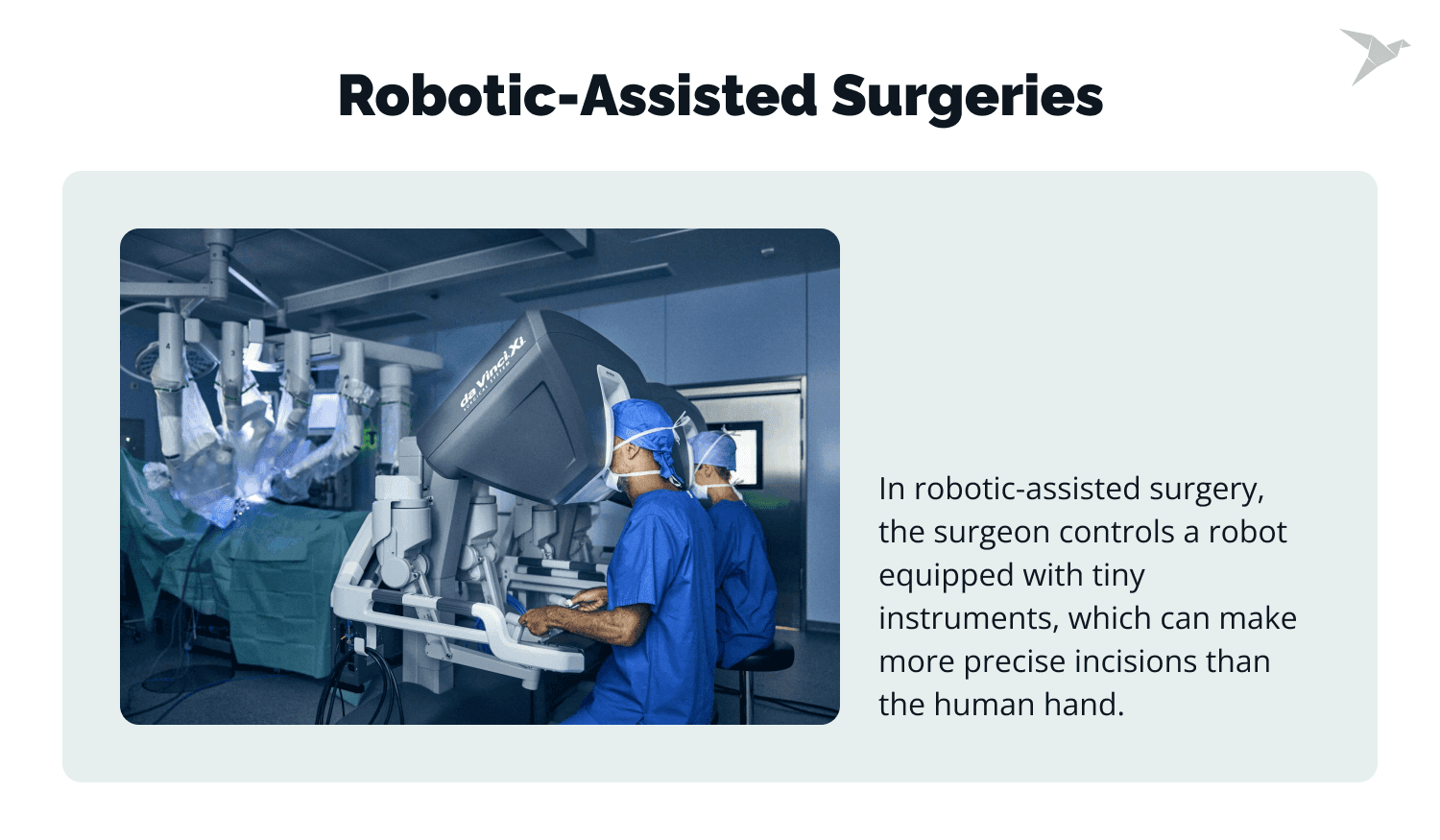
The da Vinci Surgical System has been in operating rooms long enough that "robotic surgery" no longer needs explaining. The surgeon works the controls, and the instruments are smaller and steadier than a hand at the end of a four-hour procedure.
Smaller incisions mean less infection risk, shorter stays, and faster recovery. Research published in JAMA Surgery found fewer complications and quicker recovery for robotic-assisted procedures compared with traditional surgery.
Automation in hospital operations: Streamlining workflows
The unglamorous version of hospital robotics is already routine. Robots move medication, deliver meals, clean rooms, and run inventory, which returns hours to staff who trained for clinical work.
Xenex Disinfection Services builds robots that disinfect rooms with ultraviolet (UV) light. They have been shown to cut hospital-acquired infections by up to 50%, and those infections are both a patient safety problem and an expensive one.
Robotic exoskeletons for patient mobility and rehabilitation
Exoskeletons give external support to patients whose mobility is impaired by spinal cord injury, stroke, or similar conditions. Standing, walking, and stairs all become possible again, which matters for rehabilitation and for how a person lives day to day.
The ReWalk Exoskeleton has been used by patients with paraplegia to walk. Fifteen years ago that was a research paper rather than a product.
9. Healthcare System Integration and Interoperability
This is the least exciting trend on the list and the one that blocks most of the others. Patient data sits in systems that were never designed to talk to each other, and the cost of that shows up as duplicate tests, delayed treatment, and occasionally a clinical error.
Nothing above works well without it. AI needs the data in one place. Remote monitoring needs somewhere to write. Providers modernizing their records often bring in an EHR software development company to build or migrate a compliant platform, and the integration work is usually the bigger half of that job.
Integrating healthcare platforms with big data for enhanced patient care
Intermountain Healthcare connected its electronic medical record system to predictive analytics to find high-risk patients and manage them before they deteriorate. Readmissions fell and so did cost, which is the combination that gets an integration project funded.
Pulled together across a population, the same data shows health trends, reduces duplicate testing, and makes care coordination possible at all. Gartner estimates healthcare organizations will spend $14 billion on interoperability projects in 2026.
Budget for the whole thing, though. EHR cost includes licensing, data migration, staff training, and support that continues long after go-live.
Interoperability between EHR and IoMT
A wearable generating continuous data is worth very little if that data never reaches the record. This is where IoMT investment quietly stalls.
Medtronic's platform connects its insulin pumps and continuous glucose monitors to EHRs, so readings move between patient and clinician without anyone transcribing them. For a patient with diabetes, that means treatment adjusts on real data and complications get caught earlier.
HIMSS Analytics found 80% of healthcare executives believe interoperability will be essential to improving outcomes over the next five years. The harder part is funding the unglamorous integration work that follows.
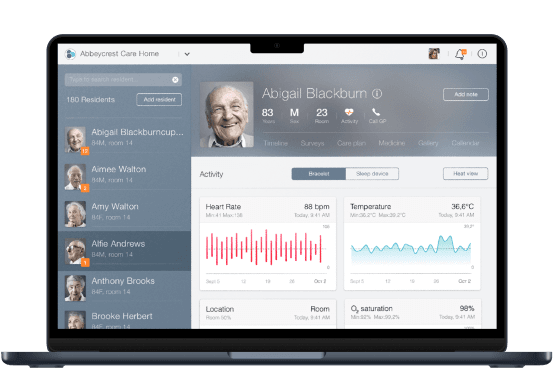
a Care home management app for E-type Care
10. Expansion of 5G Technology in Healthcare
5G matters here for one property: latency. Low latency plus high bandwidth is what lets a device send continuous data, or a surgeon control an instrument from another building, without the lag that makes both unusable.
The 5G in the healthcare industry market size is projected to reach $1,038.55 billion by 2034, expanding at a CAGR of 32.80%, according to Precedence Research.
5G for real-time remote monitoring and diagnosis
Continuous monitoring only works if the data arrives continuously. A cardiac patient at home can have heart rate and ECG streamed to a clinician in real time, and an abnormality triggers a call rather than sitting in a queue.
This matters most where the nearest hospital is far away, which is also where mobile coverage tends to be worst. That tension is real, and it limits how fast this rolls out.
5G-enabled medical devices for faster data transmission
Surgical and emergency equipment is the demanding case, because those devices cannot tolerate a dropped packet. High-speed transfer is what makes robotic surgical systems, telemedicine platforms, and remote diagnostics viable over a network.
Remote surgery is the headline use. A da Vinci Surgical System on a 5G connection narrows the delay between a surgeon's hand and the instrument, which is the technical barrier to operating on a patient in another city. Regulation and liability are the other barriers, and they are moving slower.
Patients see it in smaller ways. Smart inhalers and continuous glucose monitors get real-time alerts instead of a sync whenever someone remembers to open the app.
Why Partner With TechMagic for Healthcare Software Development
Most of the trends above share a failure mode: the pilot works and the rollout stalls on data, integration, or a security review. That is the part we get hired for.
We have built HealthTech software since 2014: custom EHR and EMR platforms, telemedicine systems, applied AI features, IoMT data integration, and FHIR and HL7 interoperability. Our security team holds CREST accreditation and a Certified AI/ML Pentester credential, which is the level of scrutiny a system handling patient data should get before it goes live.
If you are weighing one of these trends for a real project, we can tell you what it takes to ship it, including when the answer is that you do not need to build it yet.

Wrapping Up
Ten trends, and a pattern that runs through all of them. The technology is mostly ready. The data it needs is not, because it sits in systems that do not talk to each other, under security designed for a smaller attack surface.
So the sequence matters. Interoperability and security are the dull items on this list. They also decide whether the exciting ones ever reach a patient. Organizations that fix the plumbing first will ship the rest faster than the ones chasing the headline technology.
FAQ

It moves detection earlier. Models trained on large image sets find patterns in scans that are easy to miss, which is why radiology and pathology adopted this first. Google's DeepMind Health matches expert clinicians on detecting diabetic retinopathy in eye scans. In practice, the harder part is getting clean, labeled data out of the systems you already run.
It removes lag. Continuous monitoring needs data arriving in real time, and remote-controlled surgical instruments need the delay between hand and tool to be imperceptible. Both are latency problems, and 5G is the first mobile generation to solve them at scale.
Fit and cost. A printed device is made to one patient's anatomy rather than an average, so it seats better and causes fewer complications. The University of Michigan printed a prosthetic arm for under $100, against roughly $5,000 for the traditional equivalent.