
 Software Development
 Security Services
 Cloud Services
 AI Services
 Other Services















 TechMagic Academy


Key Reasons Why You Should Use React for Web Development
Last updated:11 March 2026


The choice of a frontend technology is not something you do on a whim. It affects how fast your team can build, how easy the code is to maintain, and how well the product handles growth. React has stayed relevant for one simple reason: it helps teams build a modern user interface without adding more complexity than the project needs.
For a business planning new digital products or improving existing web pages, React gives room to grow. A skilled React developer can use it to build reusable components, keep the codebase organized, and support steady iteration as product requirements change.
In our new article, we break down the main reasons teams choose React, where it works best, and what to keep in mind before adopting it. We also look at common follow-up questions, including "Can you use react native for web?", "What is React for web development?", and " How do tools such as React Developer Tools support debugging and day-to-day development.
Key takeaways
- React supports scalable frontend development through reusable components.
- React is supported by a strong ecosystem of libraries, such as Redux for state management and React Router for navigation.
- React excels at handling complex user interfaces with ease.
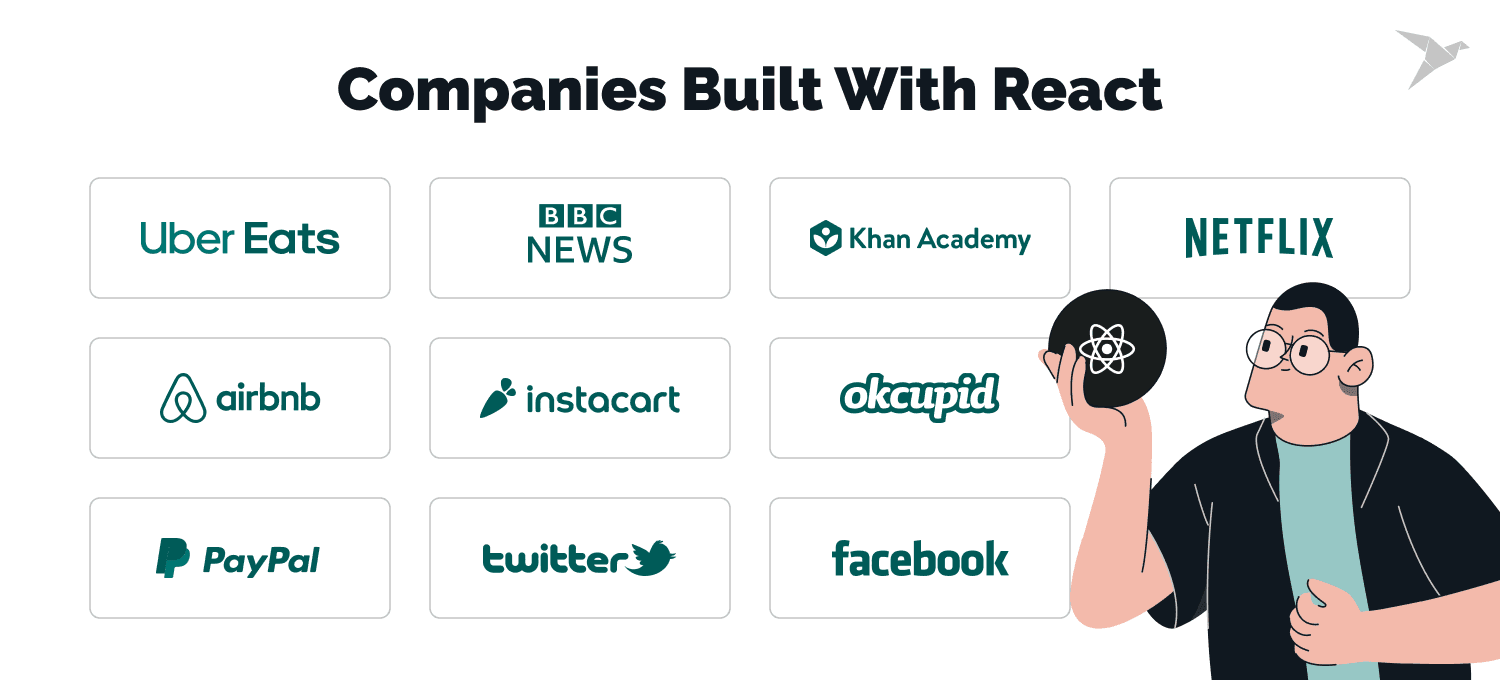
- React is backed by Meta (formerly Facebook) and is widely utilized by major companies such as Netflix, Airbnb, and Uber.
- It helps teams keep code more structured and easier to maintain.
- Its ecosystem covers rendering, routing, testing, and debugging.
- It works well for both early-stage products and large systems.
What is React.js?
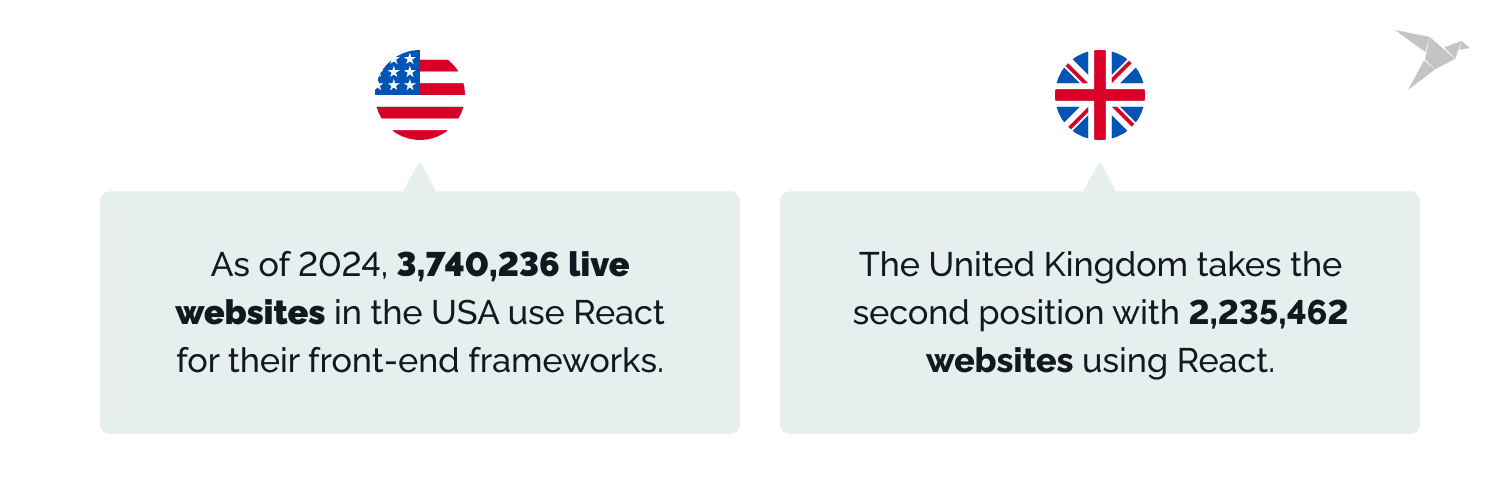
It is a JavaScript library used to build interactive user interfaces with reusable pieces called a react component. This component-based model helps teams create consistent layouts and maintain code more easily across a product.
React uses a virtual DOM to compare changes before updating the browser DOM. That reduces unnecessary updates and helps applications stay fast and predictable.
It focuses on the view layer only. For routing, data fetching, or server-side rendering, teams usually add supporting tools and frameworks based on project needs. This flexibility is one reason React remains common in the web development field.
Originally created for Facebook's software system, React is now widely used by web developers to build sites, dashboards, and scalable web applications. It can also support developing mobile apps and other mobile apps workflows through the broader React ecosystem.
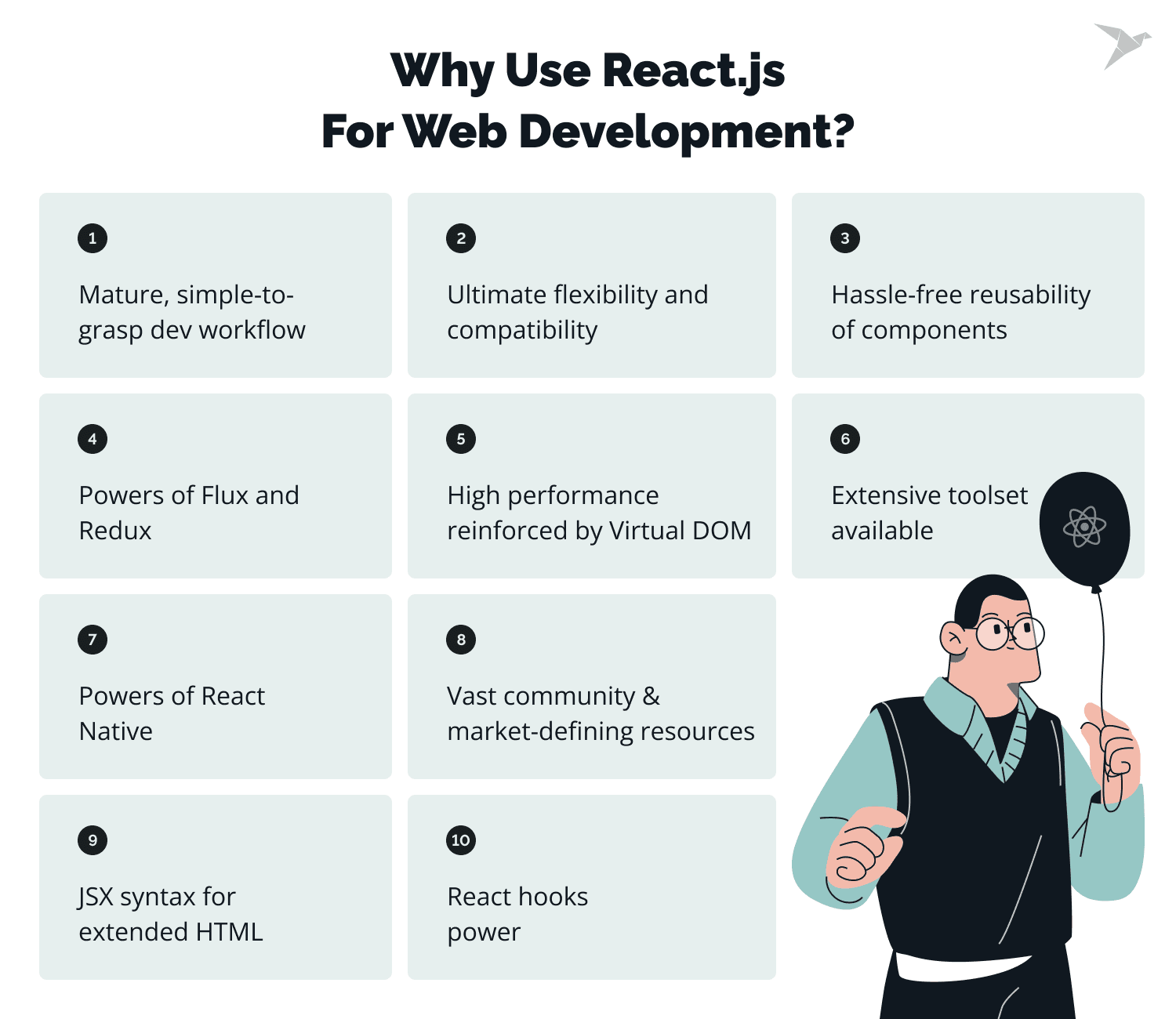
Why Use React.js for Web Development?
Choosing a frontend technology affects how a product evolves over time: how easy it is to extend, maintain, and scale. React.js remains a practical choice because it supports structured development without forcing strict architectural decisions early on.
Teams use React to build interfaces that can grow with the product. It works well for both small features and large applications, and it integrates with a wide range of tools and backend technologies. This flexibility makes it easier to adapt as requirements change.

So, let’s take a closer look at the reasons to use React.js, as summarized by our CTO, Andrew Kuzmych.
Component-based structure
React applications are built from reusable components. This reduces duplication and makes it easier to manage large codebases. Each component can handle its own logic and rendering, which helps teams update one part of the interface without affecting the rest of the system.
This model is still one of React’s strongest advantages. It works well for design systems, product interfaces, and applications that grow over time.
Flexible integration

React works with different backends and can be introduced gradually into existing projects. Teams do not need to rebuild an entire application to start using it. They can add React to a single feature, a dashboard, or a customer-facing product area and expand from there.
That flexibility is also reflected in the broader ecosystem. In the 2025 Stack Overflow survey, Next.js reached 21.5% usage among professional developers, which shows how often React is now used together with framework-level tooling rather than as a standalone UI layer.
Predictable data flow
React follows a one-way data flow model. Data moves through components in a clear direction, which makes application behavior easier to track and debug.
That matters more as products become more complex. A predictable structure helps teams understand how state changes affect the UI and reduces the chance of hidden side effects. This is one reason React continues to be used in large production systems.
Ecosystem support
React’s ecosystem is one of the main reasons it remains relevant. The core library is supported by frameworks, developer tools, testing libraries, and data-handling solutions that help teams address routing, rendering, and performance requirements.
This has become more important in the React 19 era. The React team’s 2025–2026 updates focused on the stable React Compiler, ongoing work around Server Components, and the launch of the React Foundation under the Linux Foundation in February 2026. These changes show that React is still evolving as a long-term platform, not just maintaining legacy popularity.
Cross-platform potential
React can be used beyond web interfaces. Teams may also use react native for web development when they want to share part of the logic across web and mobile products while still adapting the UI to each platform.
This does not mean one codebase solves every cross-platform problem. But it does give teams a practical way to reuse patterns, skills, and some application logic across environments. React’s official positioning as a library for web and native user interfaces reflects that broader use case.
React is approachable at the start, but building a scalable React application still requires solid knowledge of state management, rendering, and component design. That is why it works well for both early-stage products and long-term systems handled by experienced developers.
Its flexibility comes from how React components interact with the Document Object Model within the JavaScript programming language ecosystem. Backed by a vast community, React is mature and adaptable, but not simple in every case, especially when projects also involve native code.

When to Use React?
So, how do you know when to use React for your next web development project? Here are some use cases where React can provide significant value.
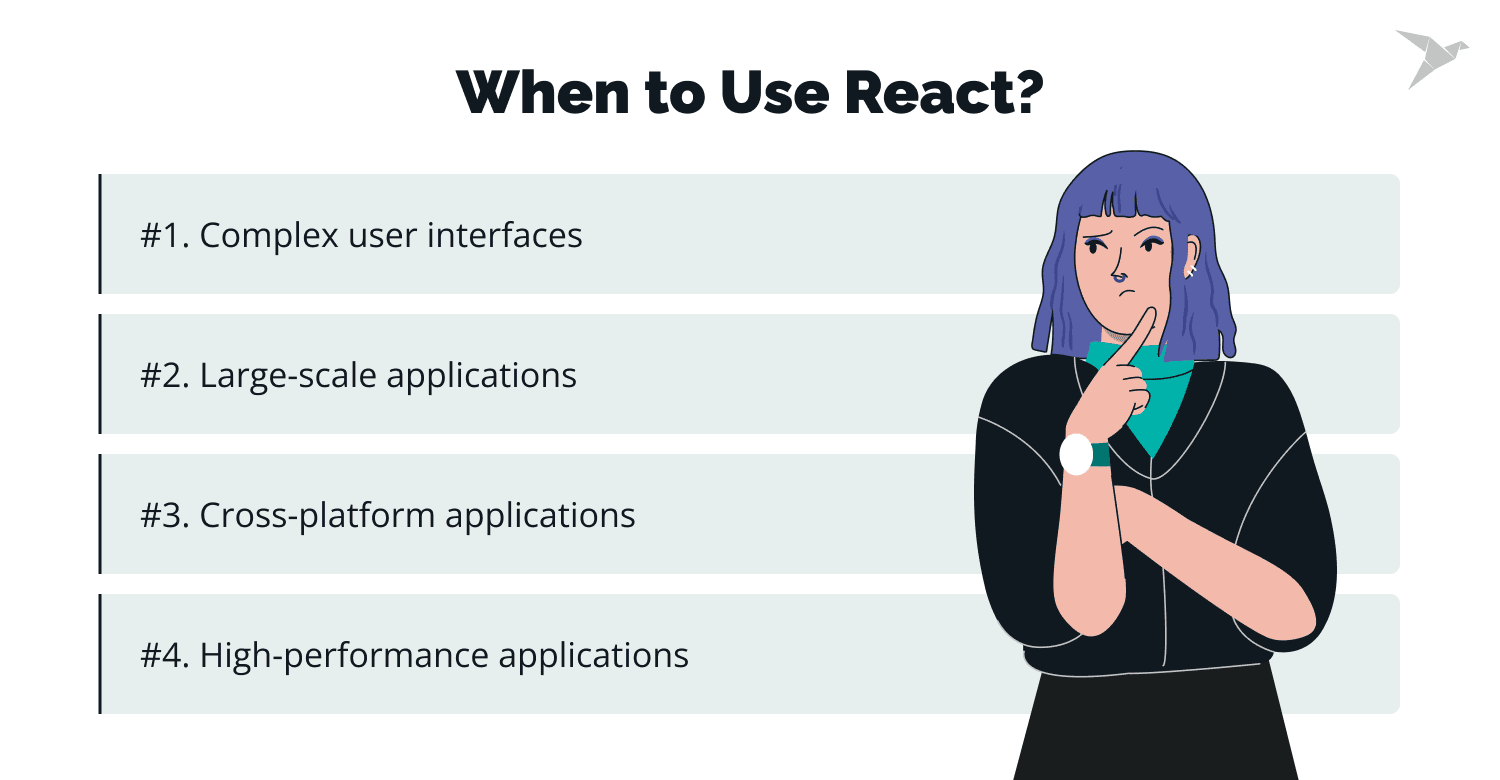
Complex user interfaces
React excels when you need to create user interfaces with ease. Suppose your web application has many dynamic and interactive elements, such as real-time updates or data visualization. In that case, React can help you build a responsive and seamless user experience.
Large-scale applications
React is well-suited to large-scale products because its component-based structure supports modular code and easier maintenance. Teams can reuse logic and interface patterns across features, which helps keep the development process organized as the product grows. This is one reason many React developers choose it for systems that need to evolve over time.
High-performance applications
React handles complex interfaces efficiently by updating only the parts of the UI that change. Its rendering model reduces unnecessary DOM work, which helps when applications manage large datasets, interactive views, and many HTML elements. That makes React a strong fit for dynamic web applications built with substantial amounts of JavaScript code.
Cross-platform applications
React can support web, desktop, and mobile applications through its wider ecosystem. React Native is commonly used for mobile products, while web-based solutions can share patterns and parts of the logic across platforms. Compared with some other frameworks, React gives teams a flexible web framework for building products that extend beyond other web pages or a single platform.
Practical example
Consider a product team building a dashboard for a growing SaaS web project. The platform needs to display real-time data, support user interactions, and scale as new features are added.
Using React, the team can break the interface into smaller parts—navigation, charts, tables, and form, each managed as a separate component. These components can be reused across different web apps, which reduces duplication and keeps the codebase consistent.
As the product evolves, JavaScript developers can update or extend specific parts of the interface without affecting the entire system. For example, adding a new analytics widget does not require rewriting existing components.
Because React is an open source javascript library, the team can also rely on existing tools for data handling, state management, and performance optimization instead of building everything from scratch. The React app remains maintainable as it grows, supports iterative development, and adapts to new requirements without major restructuring.
TechMagic Experience: Projects Where We Used React
As you already know, React.js uses are quite extensive and universal. This is why we have been using the library for many projects and underlying purposes throughout the years of operation in the field. But let’s look at the two major React.js use cases from our in-house experience.
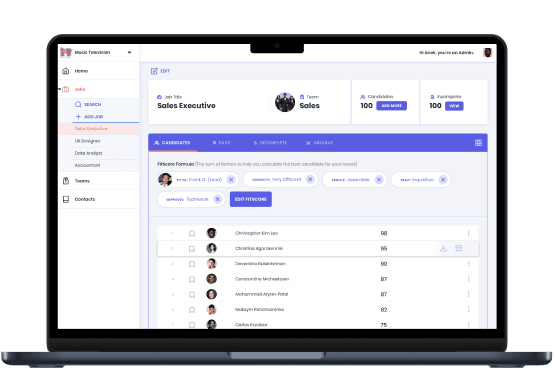
A gamified recruitment platform Good&Co
Today, it is quite difficult for companies and entrepreneurs to find and recruit the best-fitting, truly reliable, and long-term promising candidates for a specific line of work, especially in the globally prevailing remote work conditions. This is why our client set off to build a dedicated platform that would analyze human archetypes in an engaging, motivating way, helping workforce seekers better pick candidates based on universal scores.
As a React.js development company, we have used React to create user-friendly quiz widgets. These widgets, which function as an “express job opening quiz” online, are integrated with job board websites. In total, we have developed over 10 interactive widgets, ensuring their secure integration with third-party websites and making them easily embeddable into pages.
an HR tech app that was acquired by StepStone
An e-learning application for sales specialists
Fortune 500 companies are famous for their high quality and workflow consistency demands in the global market. This is why the requirements for this project were respective. In particular, we aimed to build a SaaS video education platform with high scalability potential that would be used by high-grade EU- and US-based companies experiencing low-latency video streaming issues.
React, a powerful tool, played a crucial role in enhancing the capabilities of AWS Lambda, the cornerstone of our project. This strategic use of React allowed us to adopt a segmented approach, ensuring streamlined scalability and reinforcing our confidence in the project's technical prowess.
Conclusion
React is still a practical option for teams that need structure without losing flexibility. It helps break interfaces into smaller building blocks, which makes large systems easier to maintain as they grow.
Its architecture supports scale
React applications are built from multiple components that manage their own logic and rendering. A parent component controls how those parts connect, which makes data flows easier to follow and debug. This approach works well for products that need steady iteration over time.
Modern React is bigger than a UI library
React is now part of a broader development model that includes server-side rendering, streaming, and framework-level tooling. That matters because performance and discoverability are no longer separate concerns. Teams increasingly need applications that work well for users and for search engine crawlers.
The ecosystem is still moving forward
Recent survey data shows React remains widely used. In the 2025 Stack Overflow Developer Survey, 46.9% of professional developers reported using React, while Next.js reached 21.5% among professional developers, reflecting the growth of React-based full-stack development. These numbers suggest React is not standing still—it is adapting to how teams build products today.
Cross-platform use will keep expanding
React also remains relevant beyond browser-based products. The same development model can support web interfaces, desktop apps, and mobile experiences, while keeping design patterns and logic consistent across platforms. That makes React useful for teams building products with many interactive components and shared functionality.
What this means for teams planning ahead
Whether you are starting a React project or planning your next web project, React gives teams a stable foundation for long-term development. Understanding how React organizes components, updates state, and supports patterns as simple as export default app helps developers make better technical decisions early.
React js value comes from the way the ecosystem supports maintainability, performance, and gradual growth. That is why it remains a solid choice for teams building modern digital products. If you're looking to build modern web applications on React, our React software development services can help you from architecture design to production delivery.

FAQ

React.js is common to use because it is clear, flexible, and effective. It provides fast rendering, reusable components, and robust community reinforcement.
Dominant characteristics are JSX syntax, a virtual DOM for efficient updates, component-based architecture, and unidirectional data flow.
React.js enhances performance in the way that it uses a virtual DOM to limit exposure to the real DOM. This results in rapid updates and rendering.
It is a JavaScript syntax extension. It enables writing HTML-like code within JavaScript. It makes it simpler to design and administer UI components.
React.js relies on a unidirectional flow. It means that data moves in one direction, so it is simpler to debug and get aware of the application condition.
The benefits of building user interfaces using the React library include a simplified acquisition process, high productivity, component multi-use, powerful community support, and simple adaptation to other platforms and libraries.