
 Software Development
 Security Services
 Cloud Services
 AI Services
 Other Services















 TechMagic Academy


Wealth Management Trends: Research and Insights
Last updated:18 March 2026


According to 2025 industry reports, global wealth grew by around 4–5% year-over-year, driven mainly by equity market performance and increased participation from retail investors. However, this recovery remains uneven, with slower growth in Europe and stronger gains in North America and parts of Asia.
At the same time, client expectations continue to evolve. Younger investors now expect seamless digital experiences, real-time portfolio visibility, and personalized recommendations. According to recent surveys, over 70% of high-net-worth individuals prefer hybrid or fully digital advisory models. This is a shift away from traditional relationship-based services.
In our new article, we'll discuss the most important wealth management trends to follow, reveal stats and numbers, as well as investment opportunities and regulations.
Key takeaways
- Wealth management trends are being shaped by digital transformation, tighter regulation, and changing client expectations.
- The future of wealth management will depend on how well firms combine personalization, technology, and trust.
- Firms need to rethink business models to stay competitive in a lower-margin, higher-expectation market.
- The wealth management industry has seen a shift in client expectations, with investors demanding lower fees and more value for money.
- ESG investing has shifted from a niche market to a baseline expectation for next-generation investors.
- Values-based investing remains a priority for next-generation investors who prioritize sustainable and ESG-aligned investing.
ESG Investing
Sustainable investing remains a significant part of the wealth management landscape, but the market has entered a more mature and complex phase. According to Morningstar data, global sustainable fund assets reached approximately $4.13 trillion by the end of 2025, growing 16.3% year-over-year.
At the same time, growth is no longer linear. Despite reaching record asset levels, sustainable funds accounted for around 6.5% of total global fund assets, slightly down from previous peaks, reflecting increased scrutiny and shifting investor sentiment.
Regional dynamics are also evolving. Europe remains the largest market for sustainable funds, with over $3.2 trillion in assets by late 2025, although it has seen periods of outflows as investors reassess ESG strategies and regulations tighten.
Broader ESG-related investments continue to expand. According to 2025 industry reports, global ESG fund assets reached around $12.8 trillion, with $333 billion in inflows during the year, showing that institutional demand remains strong despite market volatility.
Investor attitudes also remain supportive, though more cautious. A 2025 global study found that 87% of investors incorporate ESG factors into their strategies, with most planning to maintain or increase allocations despite economic and regulatory uncertainty.
This shift shows that ESG is no longer driven by rapid expansion alone. Instead, the focus is moving toward transparency, measurable impact, and alignment with evolving regulatory standards.

Digital Transformation in Wealth Management
This transformation is marked by the growing reliance on mobile apps, the varying progress among wealth management firms of different sizes, and the resultant enhancements in productivity and revenue.
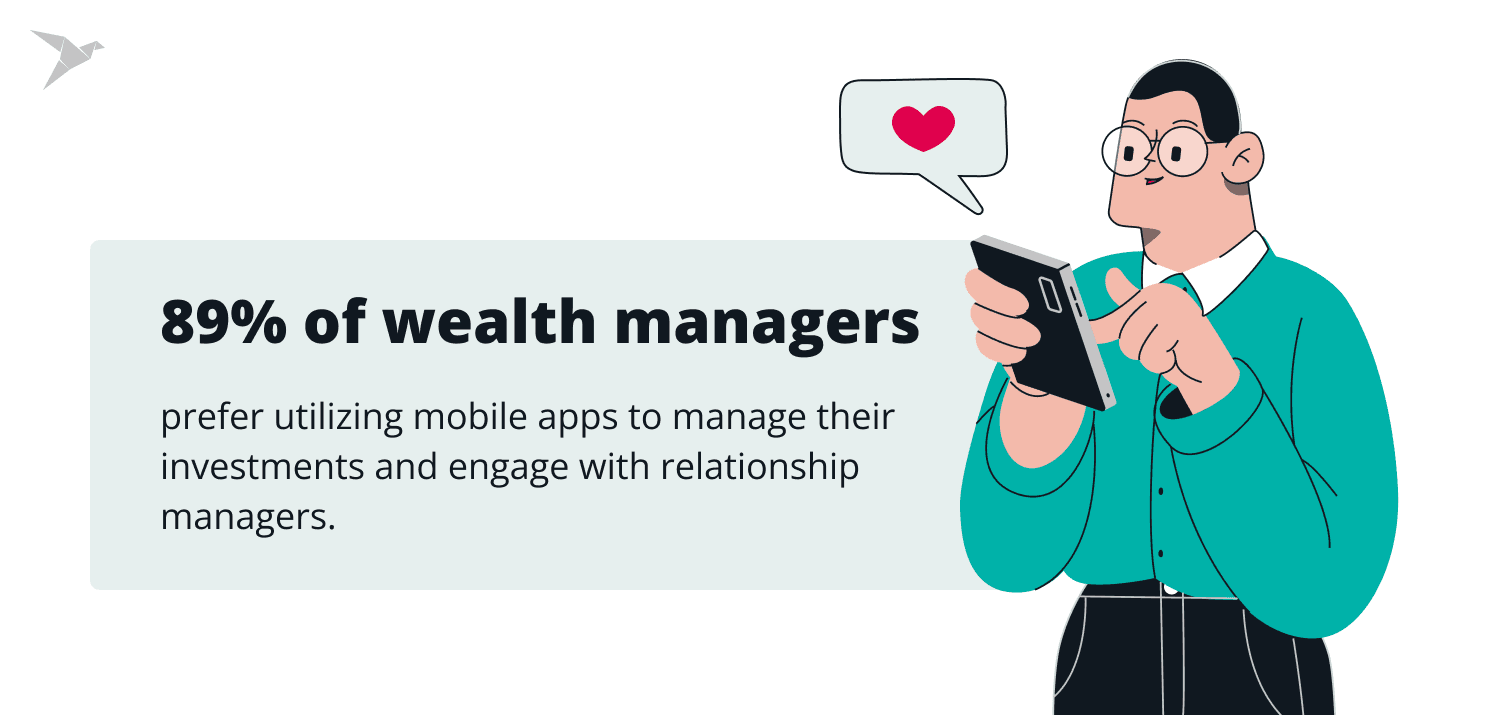
Investor preferences have undergone a notable transformation, with 40% expressing a desire for digital access to their accounts. Furthermore, an overwhelming 89% of wealth managers prefer utilizing mobile apps to manage their investments and engage with relationship managers.
The significance of mobile apps is underscored by the fact that 46% of investors claim to use them to access their account information. Among millennials, this figure rises to an impressive 72%, showcasing the generational shift towards digital interactions in the wealth management industry.
While larger firms, with assets under management (AUM) exceeding $100 billion, showcase advanced digital capabilities, with over 40% considered leaders in digital transformation, mid-market firms face a more diverse landscape. Nearly 30% of mid-market firms are digital transformation beginners, with 56% actively progressing in their digital journey. This diversity emphasizes the importance of tailored strategies based on firm size and operating model.
Notably, these digitally mature firms have experienced a commendable 13% increase in productivity. This surge in efficiency has a direct correlation with an 8% increase in AUM and an impressive nearly 8% rise in revenue.
Personalization and Customization
The structured utilization of existing customer data is paramount for generating insights that lead to bespoke or semi-bespoke proposals. This approach not only creates a perception of a unique, tailored offering but, if formulated adeptly, is more likely to resonate with the selected subset of customers. This is becoming one of the clearest wealth management industry trends.
Shifting client expectations and generational change
In the shift toward a more digitized and interconnected future, the focal point for firms in 2023 is enhancing the client experience. The current retail investor profile has evolved significantly, prompting wealth managers to extend their focus to emerging client segments too, such as how clients navigate the mass affluent market.
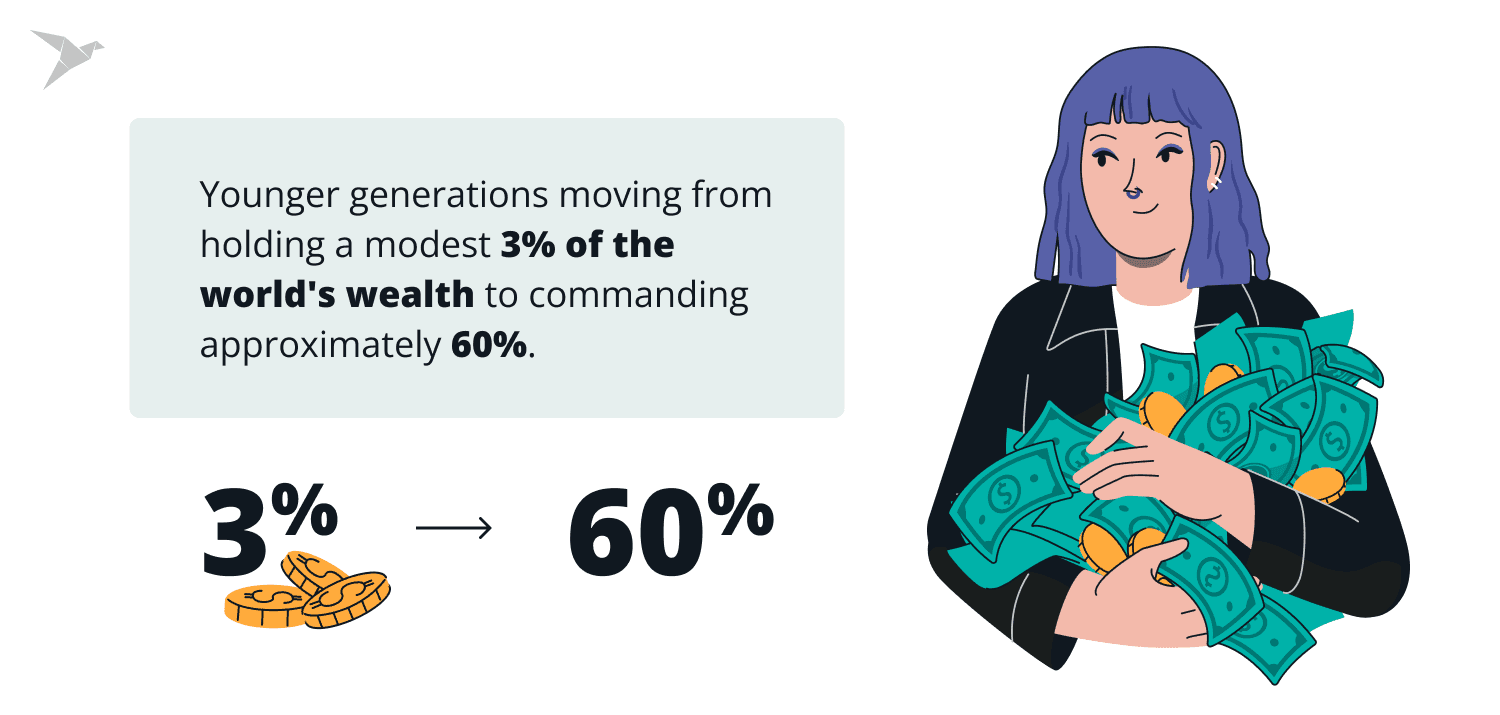
With over $70 trillion transitioning from older generations to millennials, this demographic becomes a key investor class and an important part of every modern investment strategy.
Growing demand for personalization
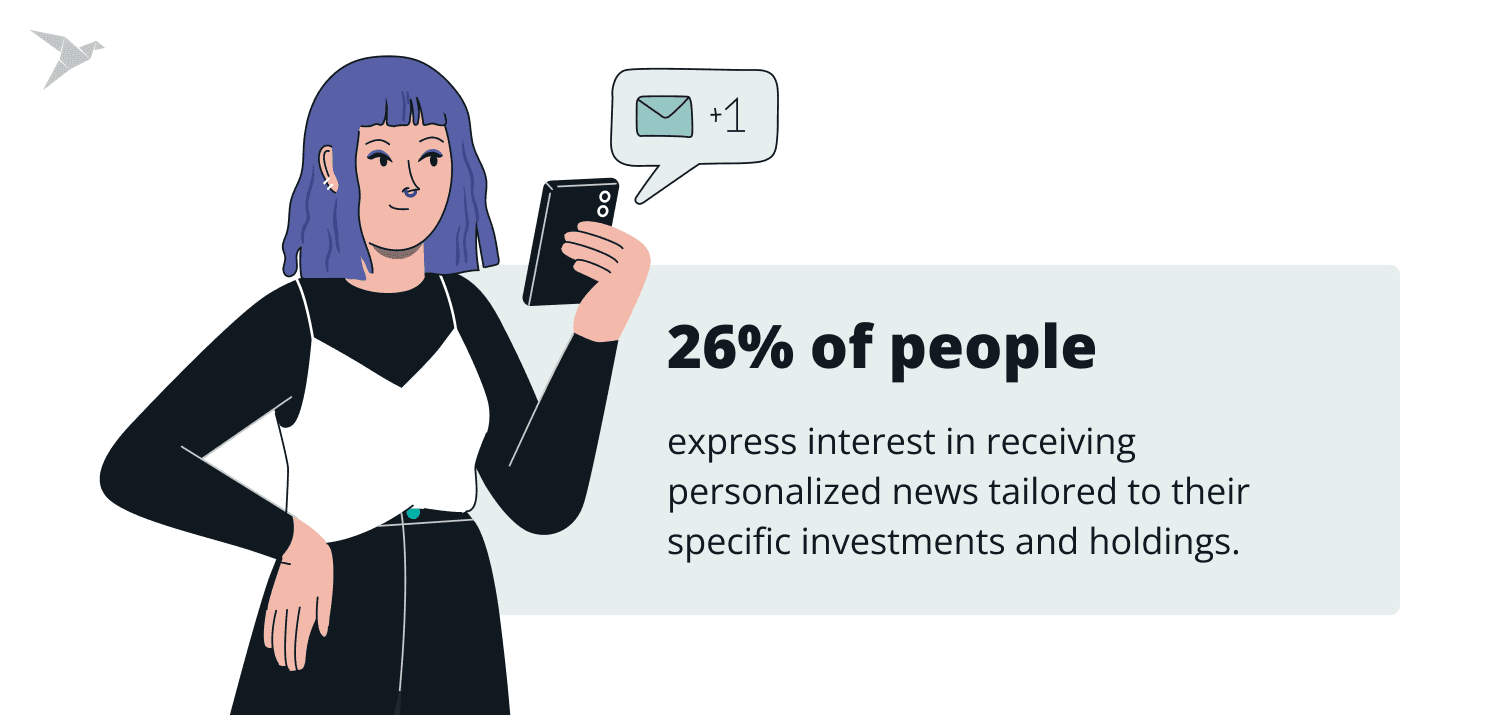
Moreover, there's a growing preference, with 26% expressing interest, to receive personalized news tailored to their specific investments and holdings, as highlighted in Refinitiv's Wealth Management Report.
The momentum towards personalization is underscored by the fact that 64% of millennials and 51% of investors aged 35-54 are willing to pay more for personalized investment products and services, according to the same report. This indicates a substantial market shift towards tailored and individualized financial offerings, which is shaping the work of financial advisors and influencing firms’ strategic positioning.
Growth of RegTech and Compliance Automation
After the decade-long bull market, firms are operating in a more demanding regulatory environment. RegTech investment keeps rising, with the market expected to reach $28–30 billion by 2026, driven by tighter rules, cross-border requirements, and demand for real-time monitoring.
Embedded compliance in daily operations
Compliance is no longer treated as a separate function. Firms are embedding it into daily workflows through automation, AI, and integrated platforms. This helps wealth managers respond faster to regulatory change while keeping client service on track.
Cybersecurity as part of compliance
As firms expand digital infrastructure, cybersecurity becomes part of compliance. In 2025, IBM reported that the average cost of a data breach reached $4.44 million. That makes secure infrastructure essential for firms serving both private clients and institutional investors.
Stricter enforcement and rising penalties
Enforcement is also getting tougher. Major financial institutions have faced over $2 billion in combined fines tied to recordkeeping and compliance failures, especially around digital communications. Regulators are paying closer attention to how firms manage data, controls, and internal accountability.
What this means for wealth managers
Compliance now needs to be continuous, technology-driven, and built into core operations—not handled as a reactive reporting task. To respond to these shifts, wealth management firms increasingly invest in FinTech development services to build scalable, regulation-ready platforms.
Integration of AI and Data Analytics
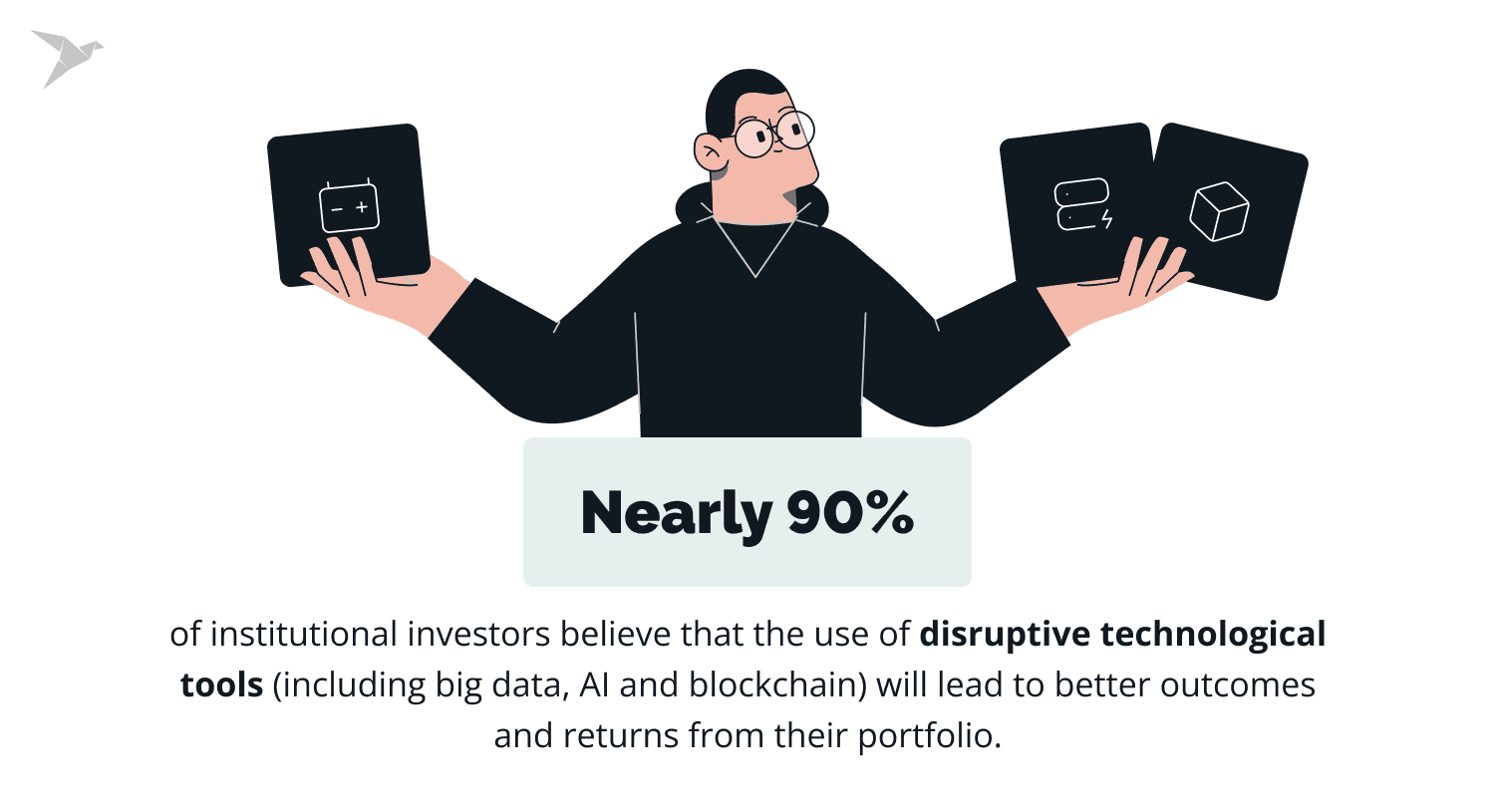
The financial sector's investment in AI for wealth management has been escalating globally. A comprehensive analysis of spending trends indicates a significant uptick, with forecasts indicating sustained growth.
As AI becomes more confirmed in operations, wealth management firms can anticipate efficiency gains and optimize resource allocation.
Leading financial institutions like Goldman Sachs and Morgan Stanley are embracing generative AI tools to generate market intelligence, streamlining the efforts of investment research analysts in information aggregation and processing. The introduction in-house, of tools like Bloomberg GPT, trained on a blend of public and proprietary financial datasets, exemplifies the growing accessibility of sophisticated AI across industry players.
Robo Advisors
Cost remains one of the main reasons robo-advisors keep gaining traction. Many platforms charge well below traditional advisory fees, which makes them more accessible to retail investors and helps firms serve new segments at lower cost.
Recent data shows the market is still expanding.A 2026 market report estimates the global robo-advisory market will grow from $14.25 billion in 2025 to $18.7 billion in 2026, reflecting strong demand for low-cost digital investing solutions. Another 2026 forecast estimates the market reached $11.8 billion in 2024 and could grow to $92.2 billion by 2033.
Robo-advisors are also becoming more relevant for firms that want to complement human advice rather than replace it. For registered investment advisors, they can support onboarding, portfolio rebalancing, and goal-based planning at scale. That makes them one of the clearest trends in wealth management as firms look for ways to combine personalization with operational efficiency.
Mergers and Acquisitions
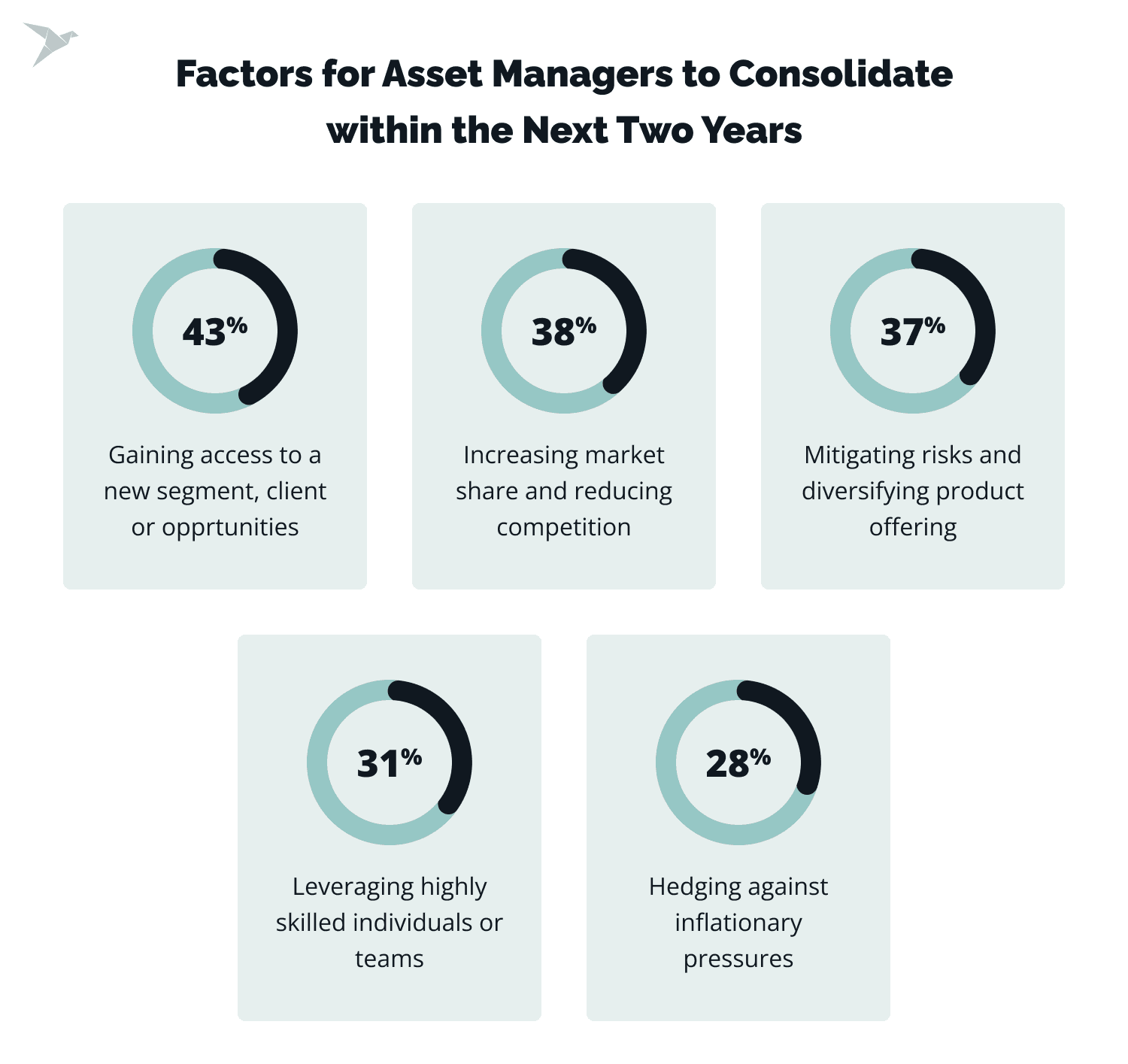
Mergers and acquisitions remain a key response to margin pressure, higher interest rates, and growing competition. Many asset managers use M&A and partnerships to expand capabilities, enter new markets, and improve scale, while optimizing cost structures.
Shift toward selective and strategic deals
Activity remains strong but more targeted than in previous years. Recent data shows that over 30% of wealth firms are considering acquisitions or partnerships, with a focus on strategic fit rather than deal volume. Firms prioritize access to new capabilities, client segments, and distribution channels.
Driven by digital transformation
M&A is increasingly aligned with digital trends in wealth management. Firms are acquiring fintech solutions to enhance investment advice, automate operations, and improve client experience, especially as hybrid advisory models become standard.
Expansion into new asset classes
Diversification is another key driver. Firms are expanding into alternative investments, private markets, and new asset classes to meet changing client demand and improve portfolio performance.
Impact of advisor succession
Advisor retirements continue to shape consolidation. Firms use acquisitions to transition client portfolios, retain relationships, and scale operations while maintaining service continuity.
Learn about our expertise in the industry and what we have to offer
Generational Wealth Transfer
The wealth management industry is entering one of the biggest shifts in its history. Over the next two decades, a massive amount of wealth will move from Baby Boomers to younger generations. Cerulli Associates estimates that $84 trillion will transfer by 2045.
This change is not only about who holds the wealth. It is also about how that wealth will be managed. Generation X is expected to inherit around $30 trillion over the next 25 years, while Millennials are projected to inherit more than $27 trillion. Many of these clients want a different experience from the one their parents had: more transparency, easier digital access, and advice that reflects their values.
That is why firms are rethinking how they engage Millennials and Gen Z during the Great Wealth Transfer. Younger investors are more open to digital-first service models, sustainability-focused investing, and tools such as robo-advising. They are also more interested in private market opportunities, not just traditional stocks and bonds.
This shift creates real pressure for wealth managers. Surveys show that 80% to 98% of heirs do not stay with their parents’ financial advisor after inheriting wealth. In other words, keeping assets across generations is no longer automatic. Firms need to earn that relationship again by adapting their service model, communication style, and investment offering.
Final Thoughts
Wealth management services are driven by AI-enabled hyper-personalization, the democratization of private market investments, and a shift toward holistic, goal-based planning. They are moving into a more demanding phase.
Firms are responding to tighter regulation, changing client expectations, digital disruption, and a major generational transfer of wealth. At the same time, they are operating through inflation, uneven market performance, and broader macroeconomic uncertainty that is likely to persist.
Looking ahead, wealth management future trends will be shaped by three forces. First, continued pressure on margins will push many wealth managers to invest in automation, AI, and integrated platforms. Second, diversification across global markets and private assets will remain a priority as firms search for new growth. Third, hybrid advisory models will become standard, combining digital tools with human expertise.
For private banks and other established players, the challenge is not just adopting new tools, but rethinking operating models. The firms that succeed will be those that align technology, compliance, and client experience into a single strategy. This is where asset management and advisory services increasingly overlap.
From a practical perspective, the advice is clear: wealth managers focus on building strong data capabilities, embedding compliance into daily operations, and investing in scalable digital infrastructure. These foundations will help firms stay relevant as client needs evolve and competition intensifies.

FAQ
ESG investing focuses on Environmental, Social, and Governance factors. It influences financial decision-making by incorporating sustainability criteria, ethical considerations, and corporate governance practices, aligning investments with values and long-term sustainability goals.
Digital transformation in retail banking and wealth industry enhances efficiency, accessibility, and personalization. It introduces technologies like robo-advisors, online platforms, and data analytics, revolutionizing how financial services are delivered and experienced.
Personalization is paramount in modern wealth management as it tailors financial advice and services to serve clients' individual preferences, goals, and risk tolerance. This holistic approach enhances client satisfaction, engagement, and overall effectiveness.
AI and data analytics empower wealth managers by providing data-driven insights, automating processes, and enabling predictive analysis. These technologies enhance decision-making, improve client outcomes, make cost savings and increase efficiency y of wealth management operations.